This election has been an interesting time to contemplate wine. My whirlwind vineyard familiarization trip across the Columbia Valley concluded on October 30th, which just happened to be my 11th wedding anniversary with Toby (our year of “steel,” which we are steadying for in more ways than one).
As I wrote on Instagram, I naively planned to blog about my experience on the go. But over the course of the tour, I clocked nearly 1000 miles on a surprisingly up-for-anything rented Kia Soul and barely scrounged up enough time to get gas; it was a very tight schedule that left me wiped at the end of every day.
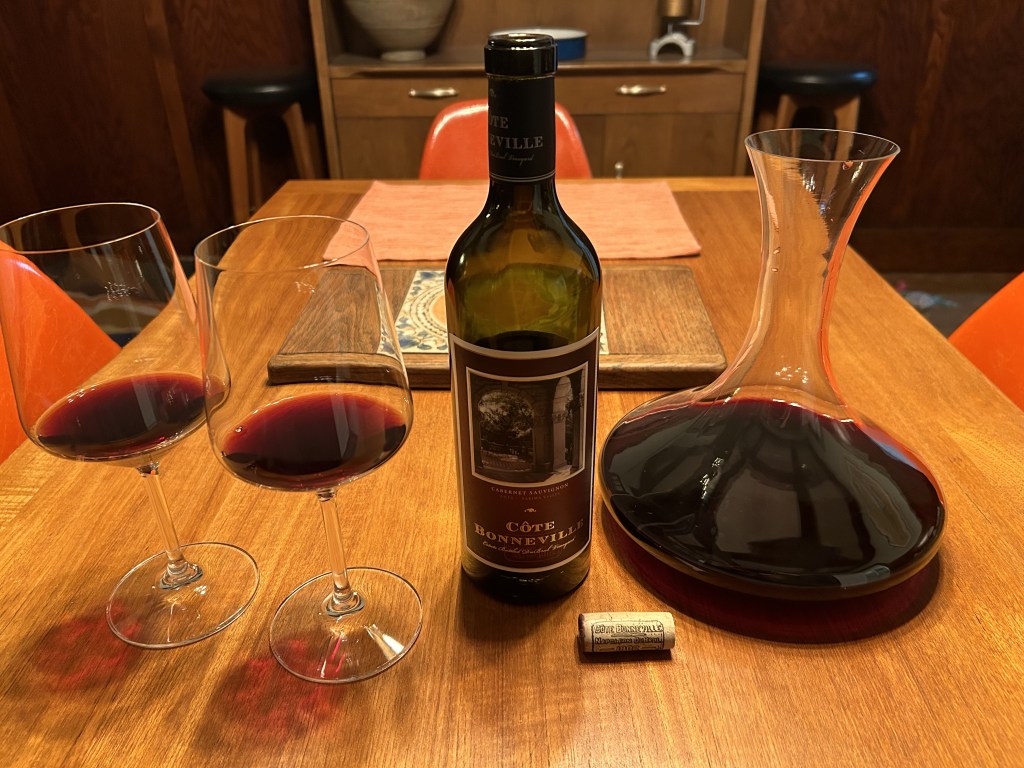

After our anniversary dinner of pizza delivery and the 2013 (our wedding year) Côte Bonneville Red Label Cabernet, we rolled right into Fall Release weekend here in Walla Walla, followed by Election Day. Followed by the day after it.
This post is not about politics, but “hangover” and “buzzkill” are the two wine-adjacent terms that describe my current mood. For a little hair of the dog, I’ve found comfort in point #7 in “My Manifesto for Despairing Democrats,” an opinion piece by Pulitzer-prize winning journalist—and Oregon wine and cider maker—Nicholas Kristof, a writer I admire for his unflinching reporting about injustice around the world (a view he extends to animals, too).
Point 7 reads: “I will care for my mental health. There’ll be many, many times in the next four years when we’ll be irritated, anxious and alarmed, probably with good reason, so we need to find a way to relax and mellow out. For me, that’s backpacking and making wine and cider. In my day job, I shout at the world, and it pays no attention, so it’s a relief to raise grapes and apples and have them listen to me. And remember that sometimes the best therapist has four legs. A few years ago, many families got a pandemic dog, and for some this may be time to get a Trump dog.”
I chuckled a little, after 20 or so conversations with Washington grape growers over the past few weeks, that Kristof has managed somehow to “get grapes to listen to him.” But I get his point—grapes don’t grandstand, and plenty of solace and wonder can be found kicking up dirt and turning over rocks in a vineyard.
I was filled with wonder on my journey.
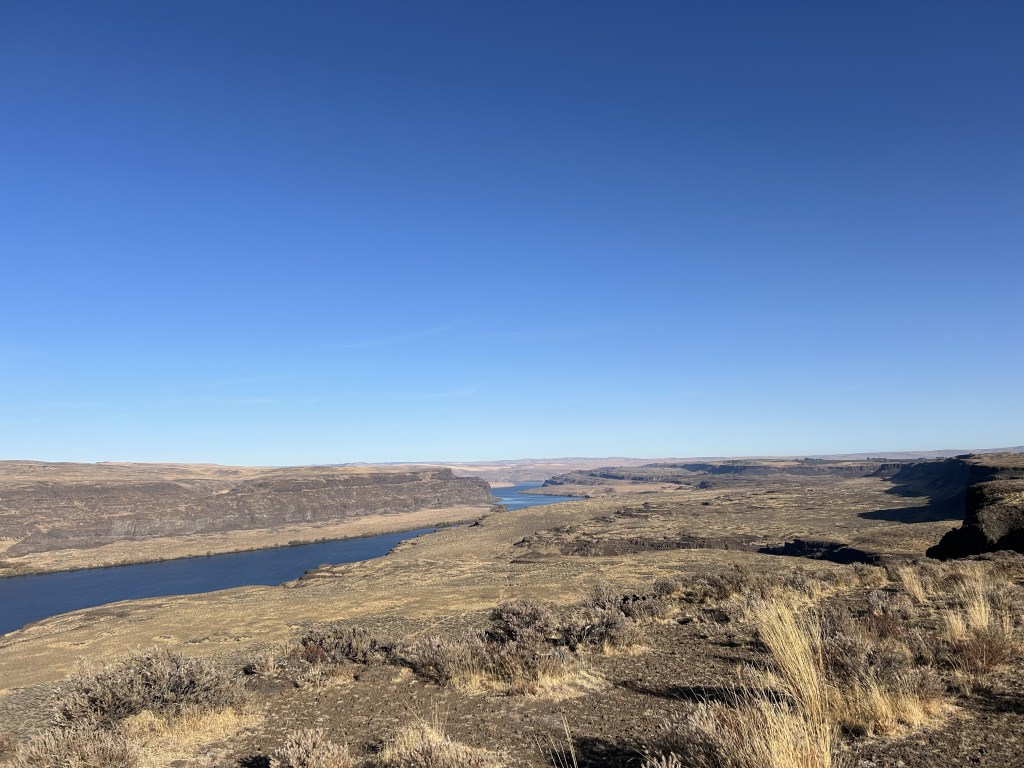
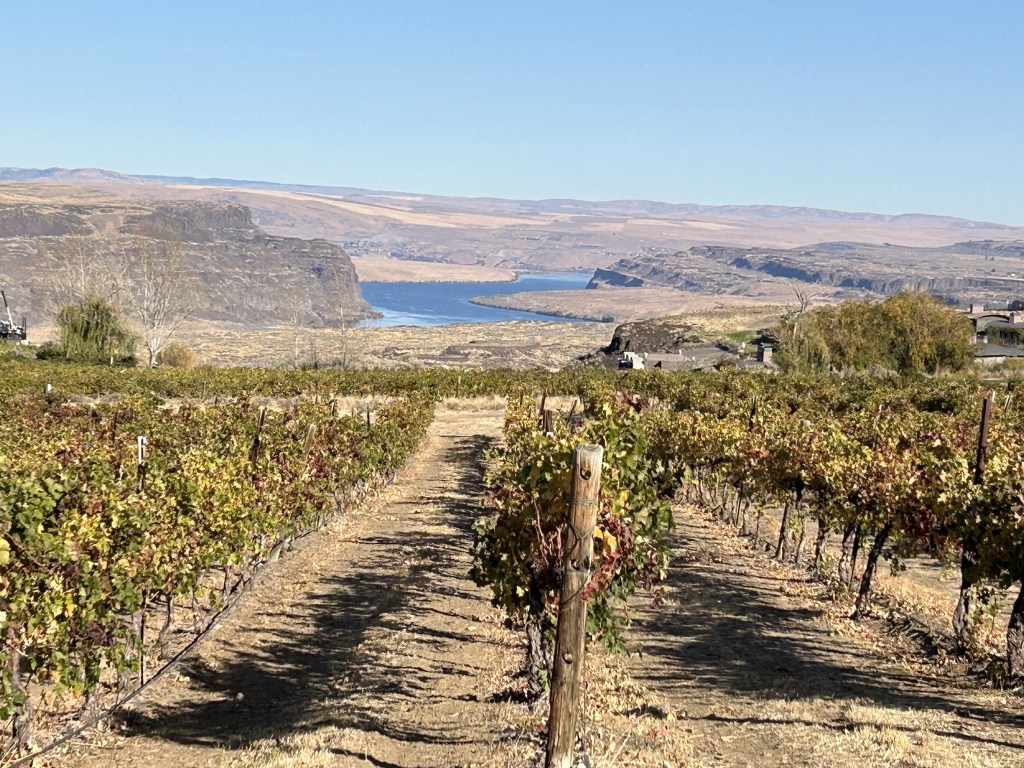
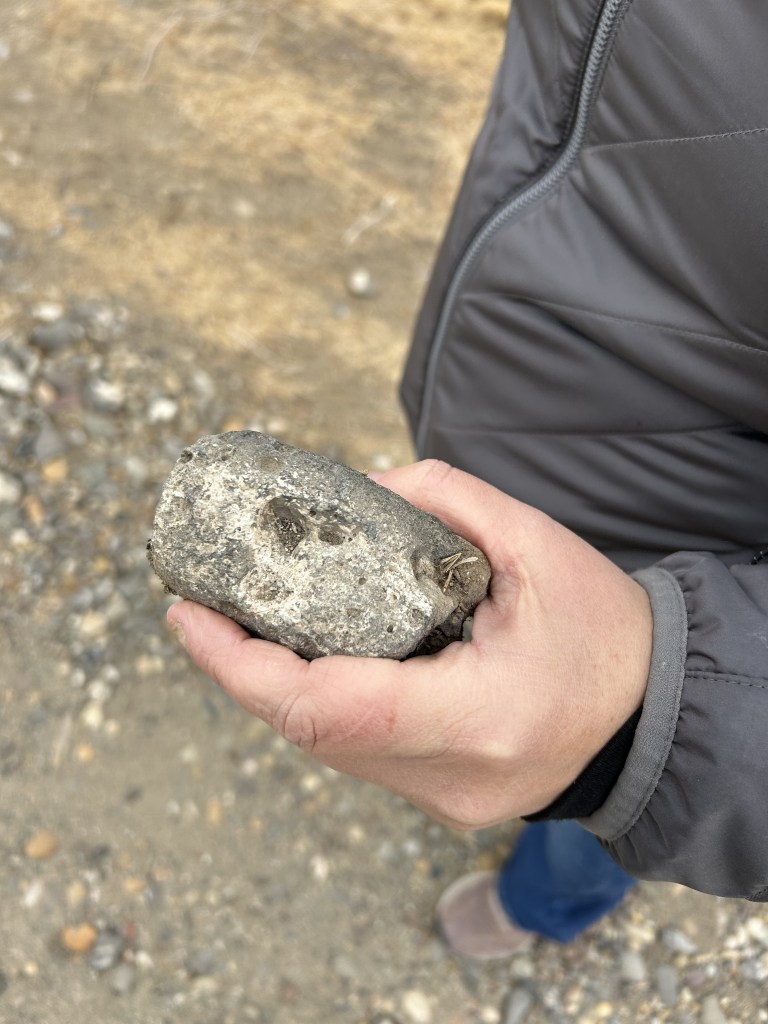
Looking out across the staggering Columbia Gorge from Inspiration Point at Cave B Vineyards, I struggled to grasp the enormity of the Missoula Floods. At Red Willow Vineyard in White Swan—where wild horses still roam (we think we may have spotted some on a nearby ridge)—Mike Sauer handed me a pumice stone. If you ever think the Missoula Floods are ancient history, consider the prehistoric volcanic forces of the Ellensburg Formation predating them by millions of years. Only one other time have I ever felt that time travel was possible, and that was when I stuck my head inside a T-Rex’s gaping skull that was slowing being chiseled out of a giant rock (at the re-opening of the Burke Museum, which I was covering for Seattle magazine).
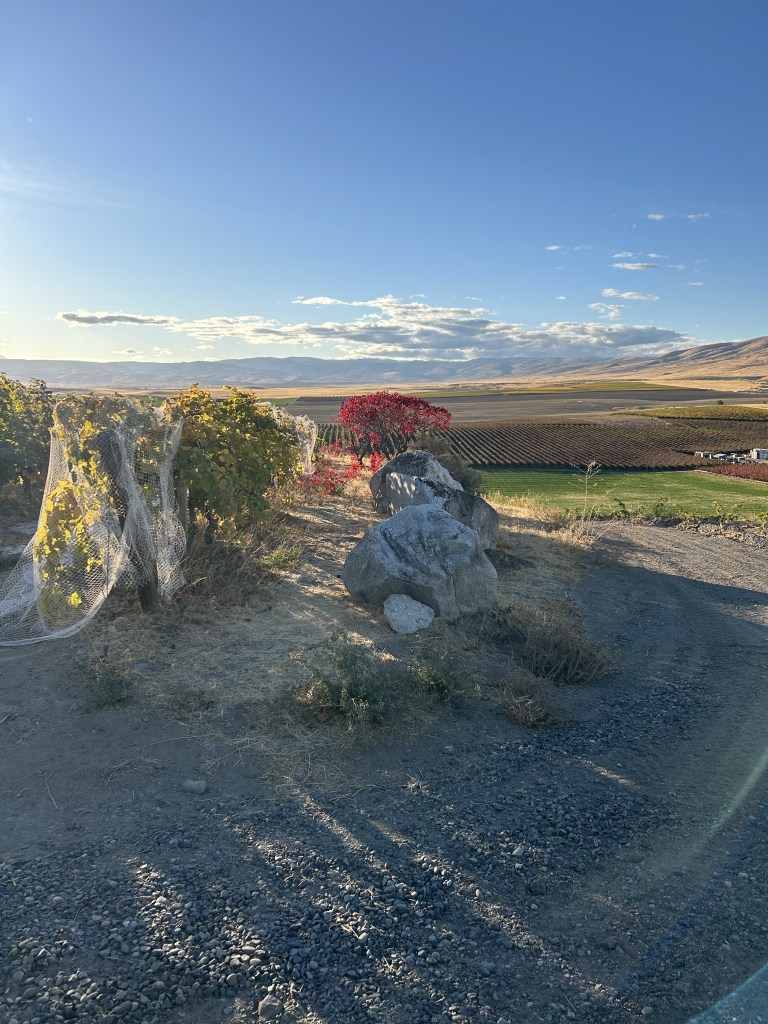
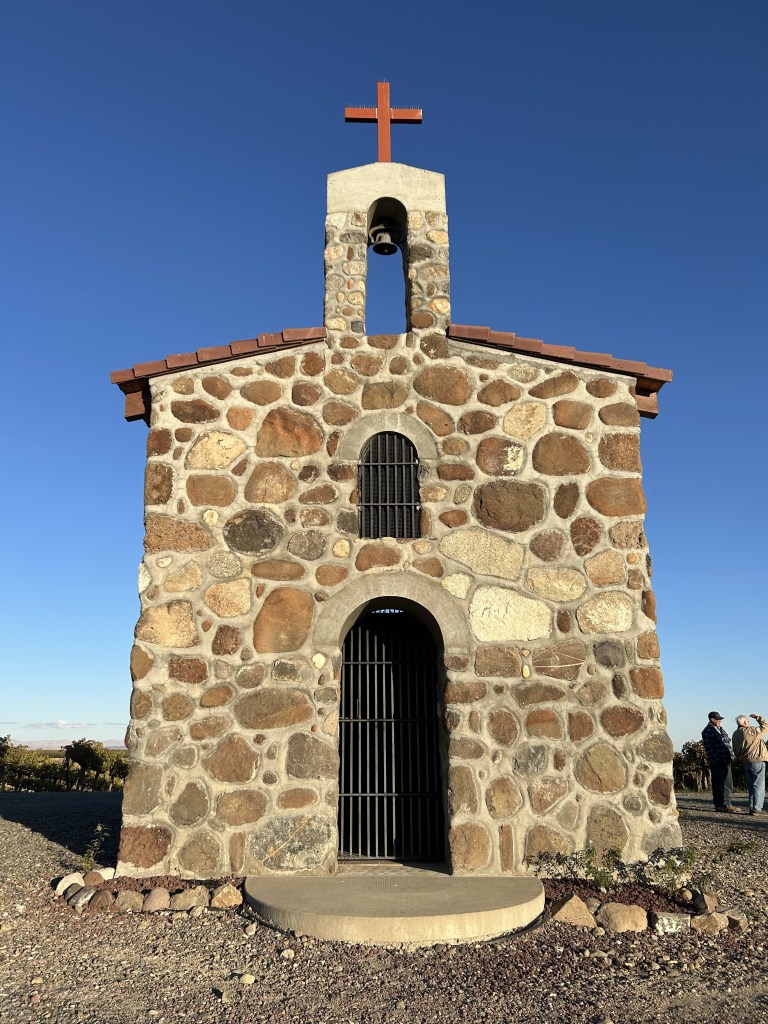

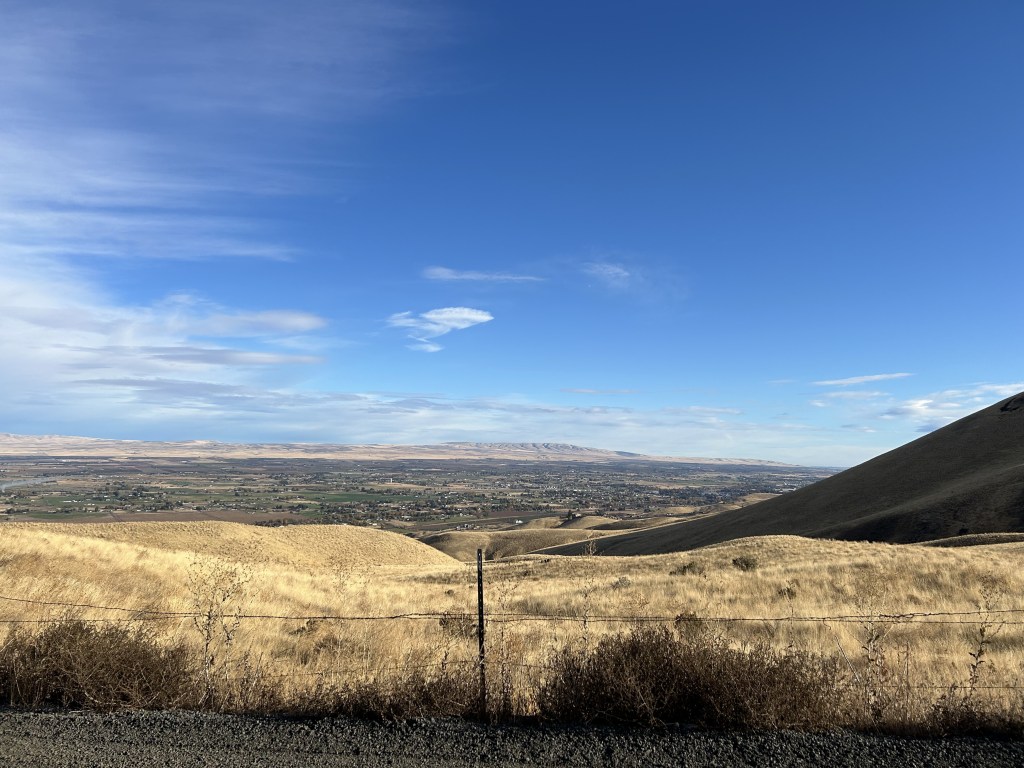
In the Horse Heaven Hills, over switchbacks cut through fields of dry farmed wheat, I stopped the car to take a photo of the Yakima valley that had unfolded below me. I wound down the window, and maybe for the first time ever, heard absolute silence:
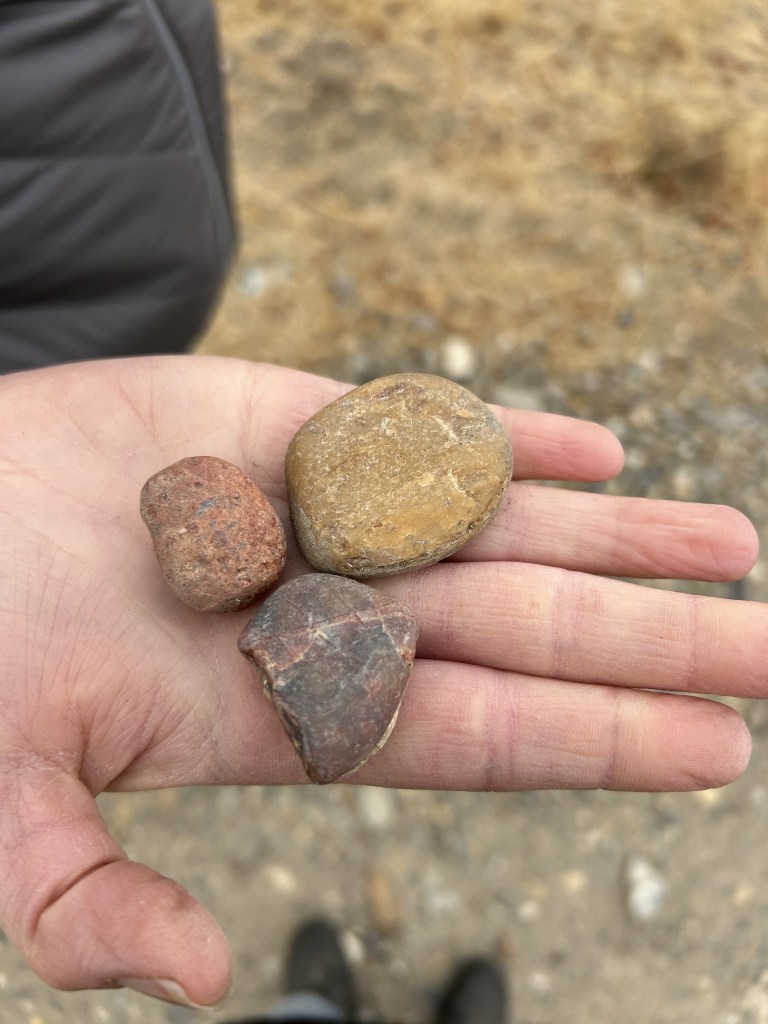
As my rock collection grew (yellow sulfuric and rust-tinged pebbles from DuBrul; my pumice stone from Red Willow; a chunk of caliche from Ganache vineyard; a cool potato-shaped and colored stone from a vineyard in the Rattlesnake Hills), I thought a lot about rocks, the forces of time, and the eternal, glacial history of the state.
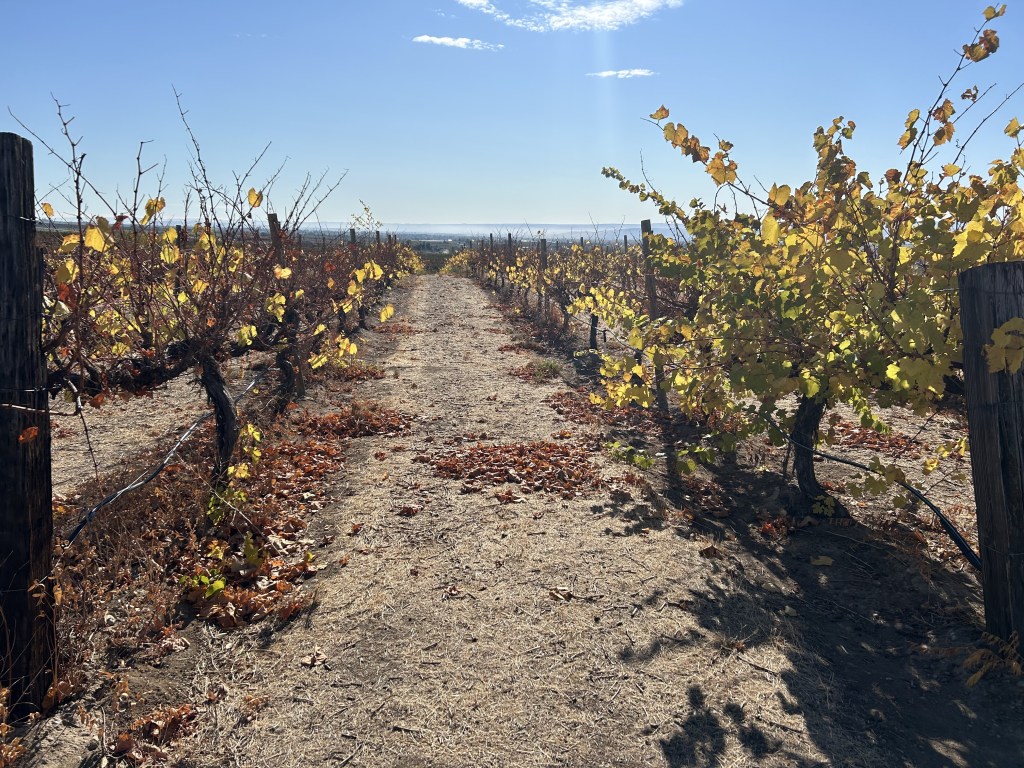
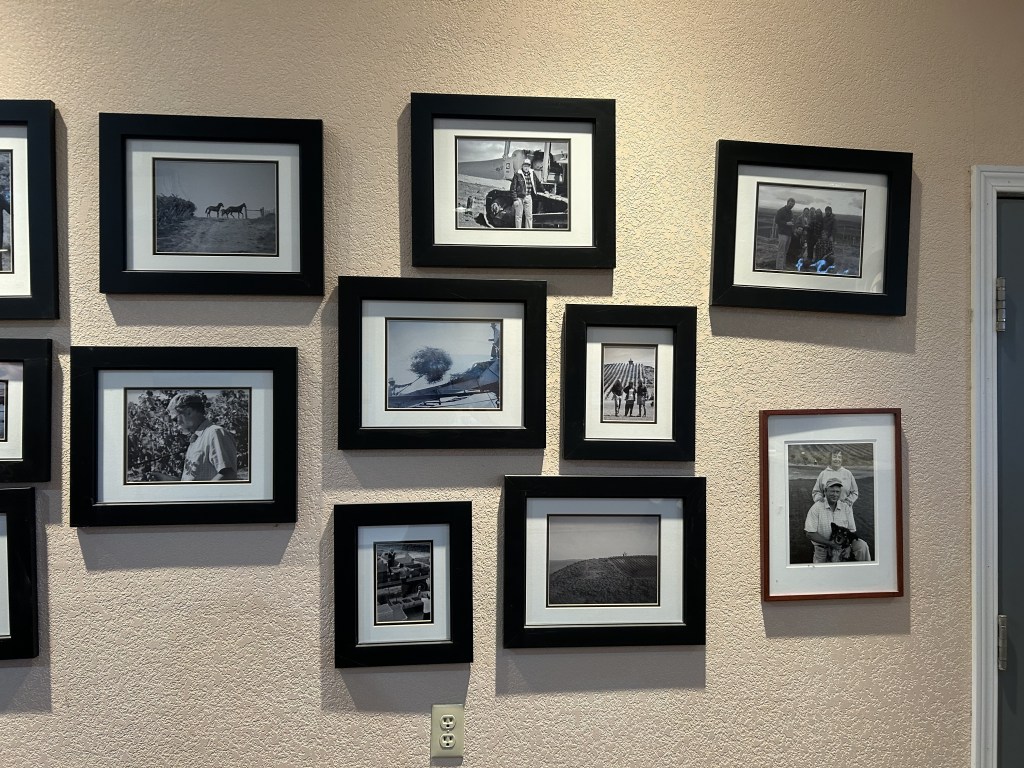
top left)
For the record, I’m a little disappointed no one has yet claimed the name “Ellensburg Formation” for their jazz ensemble or grunge rock band.
But the geologic story that makes Washington State wine so unparalleled, and distinctive, now feels etched into me.
As a philosophy student, I used to read and listen to recordings of Alan Watts, a western philosopher and writer popular in the ’60s and ’70s.
Bopping around the state’s back roads and through its dusty, rock-choked vineyards, thinking about the influence of terroir, his voice popped into my head.
her family’s Côte Bonneville winery
It was from a recording about evolution, and intelligence, and how everything on earth came to be. (Interestingly, I found a video of it, below, that was apparently animated by Trey Parker and Matt Stone!)
Here’s how some of it goes:
“Now here is a solar system, inside a galaxy, and one of the peculiarities of this solar system is that at least on the planet earth the thing peoples. In just the same way that an apple tree apples. Now maybe, two million years ago, somebody came from another galaxy in a flying saucer and had a look at the solar system and they looked it over and shrugged their shoulders and said, “Just a bunch of rocks.” And they went away.
“Later on, maybe two million years later, they came around and they look at it again and they say, “Excuse me. We thought it was just a bunch of rocks but it’s peopling…
“Where there are rocks, watch out. Watch out! Because the rocks are going eventually to become alive.”
In his “Manifesto,” Kristof writes that “despair is self-fulfilling,” and that finding a sense of purpose to navigate the contentious times ahead is necessary to help those of us who seek peace, decency, and civility.
To find mine, I’ll be looking to the grapes, and vines, and rocks. After all, if the rocks have shown us anything, it’s that change is inevitable, and it’s only a matter of time.
 Gwendolyn Elliott
Leave a comment