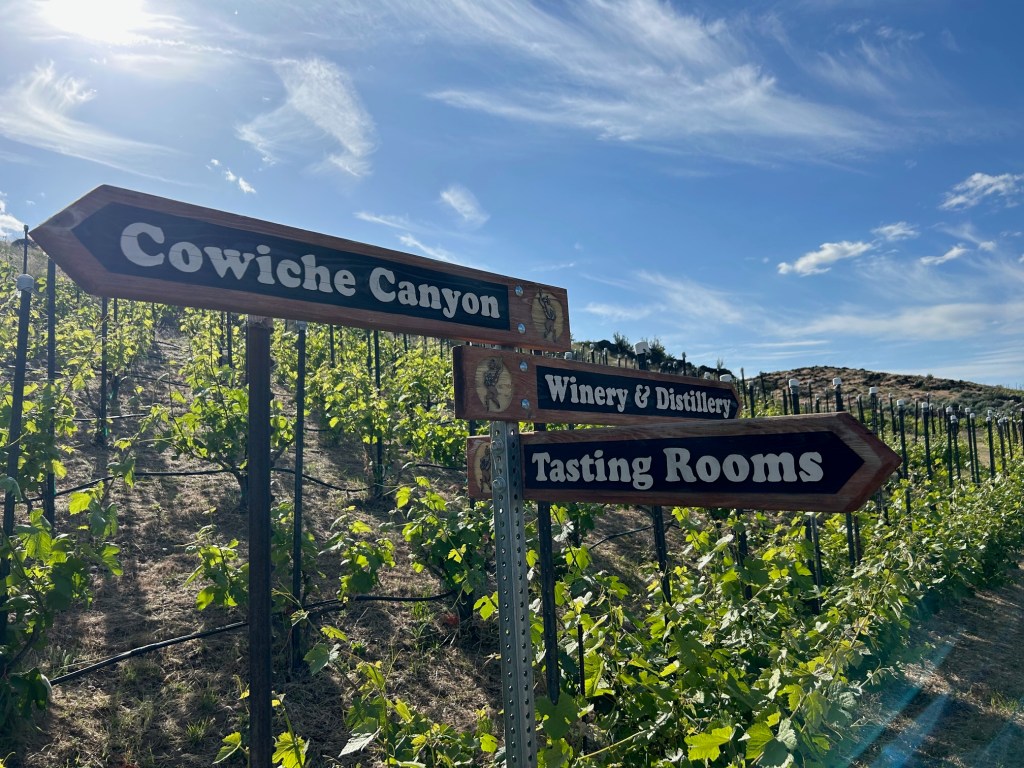
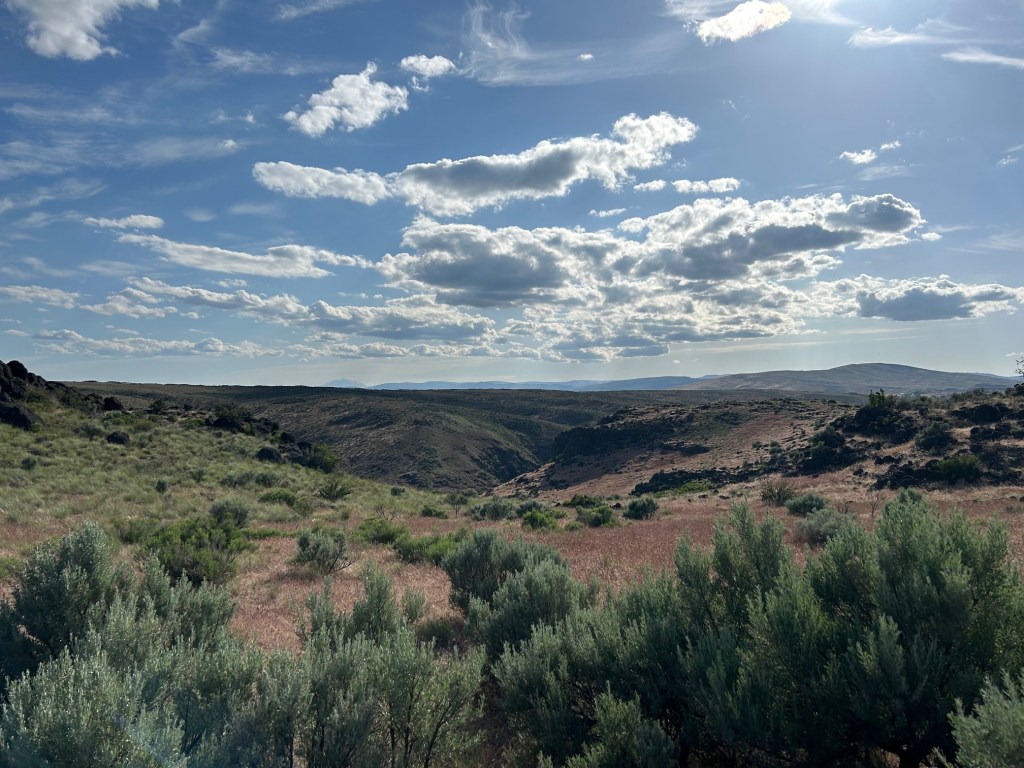
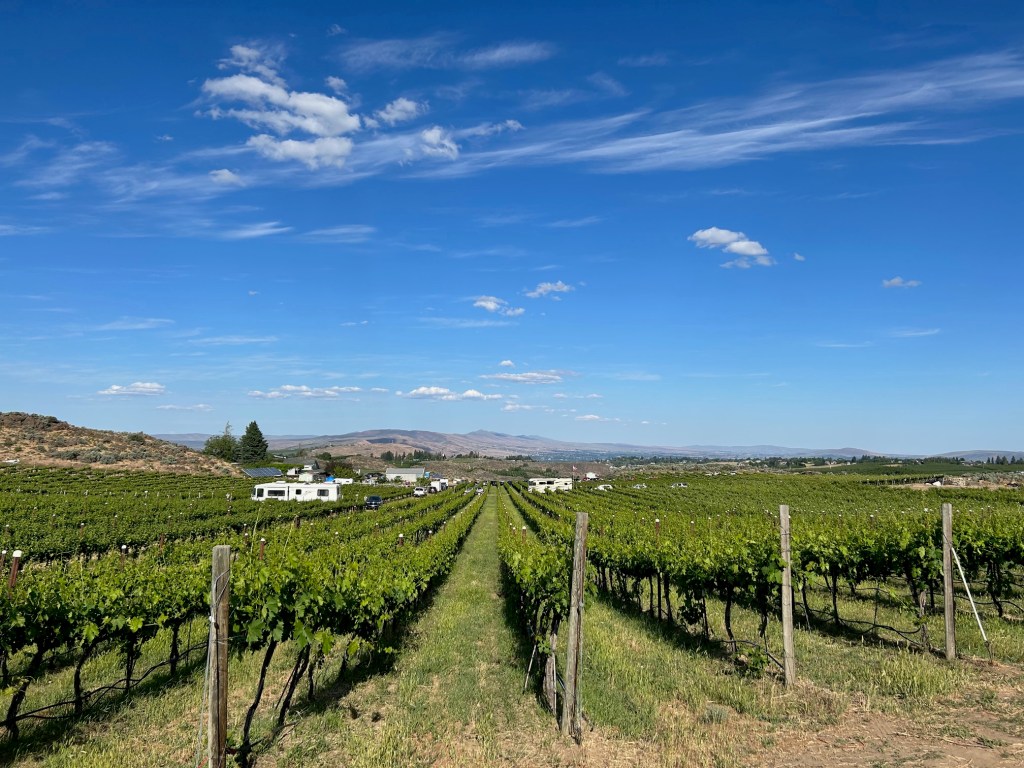
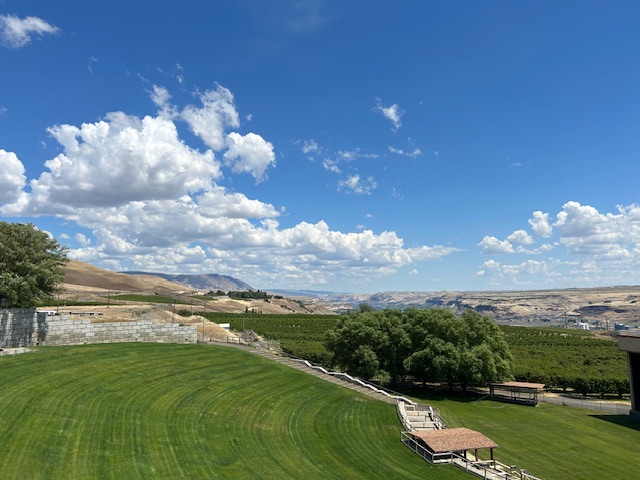
Above: An uphill spur off the beautiful Cowiche Canyon trail in Yakima will deposit you at Wilridge Winery. The hiking and scenery is great here (trail info here). If you arrive to the winery on foot, you can join the Wilridge “hiker’s club” for a discount at the tasting room.
>>>>>>
In May 2024, I learned, to my great surprise, that I had won a fellowship. I was the inaugural recipient of the Allen Shoup Memorial Wine Writing Fellowship.
Like any self-doubting writer, I considered myself a long shot for all sorts of reasons. But once the shock wore off, the main thing I kept puzzling over was: How is something like this going to work?
I am no stranger to the extremely volatile world of publishing, which, since the dawn of the internet and arrival of Craigslist, has been torn a new one in what these days can only be viewed as increasingly cruel and unusual ways. Every day, we read of the latest shuttering, downsizing, or scandal-embroiled re-org. Publications and newspapers fold every day. Editors and writers are regularly laid off en masse.
Then, there is the world of wine writing—a hyper-niche, and very small, slice of that world, making it especially vulnerable to those forces. With some highly notable exceptions, those who remain in the field—one traditionally dominated by men—are retiring or approaching retirement. Some of the established guard, having impressively survived the headwinds, have simply gotten old and passed away.
When it comes to wine writing itself, wines are usually reviewed, critiqued, and scored with numbers. A female winemaker once told me that she was through submitting her wines to be reviewed only by men—she would still like her wines reviewed, but by women. However, finding a female wine reviewer, one who specializes in Washington state wine, well, she or I couldn’t think of any.
Wine writing has other problems, too: general perception of the wine press as elitist, pay-to-play, or using overly or intentionally confusing or obfuscating language.
Even something as simple as the product itself—wine—is suffering from an image problem these days, as attitudes towards wine (and alcohol in general) have come under renewed scrutiny from consumers and regulatory or advisory groups. Tasting room foot traffic, as well as sales, are generally down across the industry.
So, back to that question: How do I drive this thing?
Well, first things first.
After about 20 years of dragging my feet, I was inspired to finally buy the domain gwendolynelliott.com (my sincere thanks to literally everyone for leaving it for me!) to see what might be possible within my own purview. I know freelancing and cold-pitching will be tough—and after many feedback loops with the especially kind and helpful Sean Sullivan, who I studied under in his Writing for the Winery class, I feel my skin has sufficiently thickened—so it’s my hope I’ll be able to contribute in some meaningful way here.
I have lots more to come. I hope you’ll follow along.
In the meantime, my fellowship essay follows below.
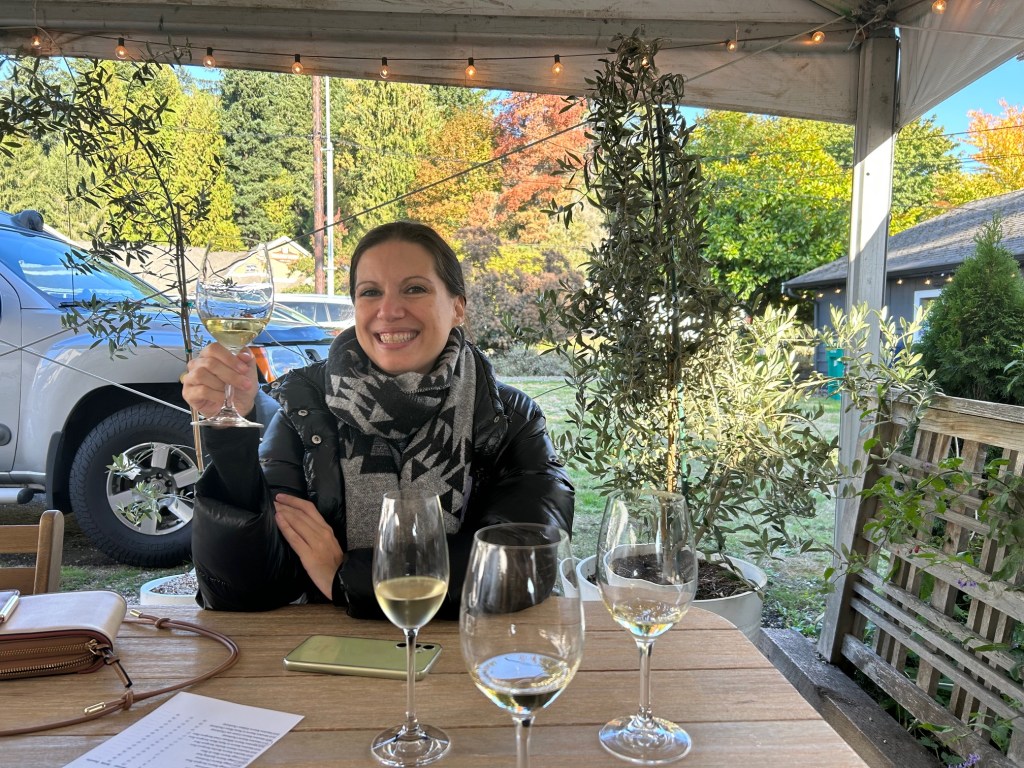
(Pictured here at Jaine Cottage.)
On a free day during a work trip to Seattle last year, I took a wine-loving Italian colleague to Woodinville for a day of tasting. Over lunch at DeLille Cellars, I asked her what she thought of wine from Washington state.
Swirling a glass of Four Flags cabernet, she noted, “You can taste the vastness of the state in these wines.”
Her succinct assessment grounded me for two reasons: First, it expressed something beyond just the expanse of flavor in a five ounce pour of knockout Washington red—for someone unfamiliar with the state’s many unique and expressive styles, the wines not only taste big, they feel big. When you taste them, you are no longer in the old world, you are an explorer of the new, a pioneer looking out over the American Northwest.
Secondly, I had recently moved from Seattle to Eastern Washington, where there is no avoiding the story of the Missoula Floods, the geological event that carved the dramatic gorges and canyons into present-day Eastern Washington and Oregon. Somehow, while capturing the taste and feel of Washington wines, she also expressed the very elemental nature of them: tens of thousands of years in the making, the wines are vast!
I love all of this about Washington state wine. I love that the inevitable tale of the Missoula Floods is delivered as often over a glass of syrah at a tasting room as much as to students in geology class. I love being continually surprised, especially since my move to Walla Walla: Turns out so much of what I thought I knew about Washington wine was just the tip of the Cordilleran ice sheet.
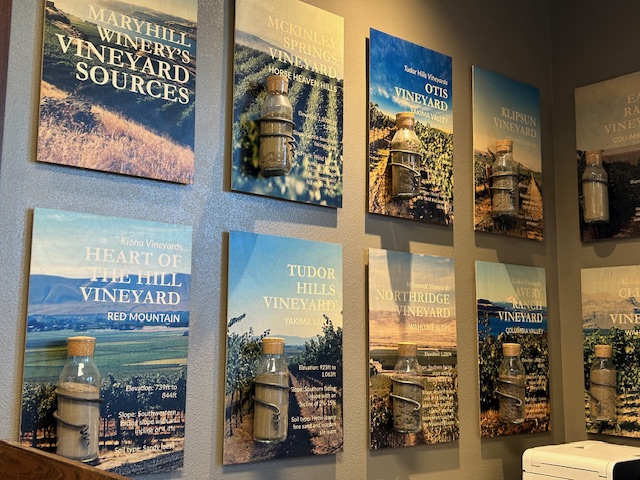
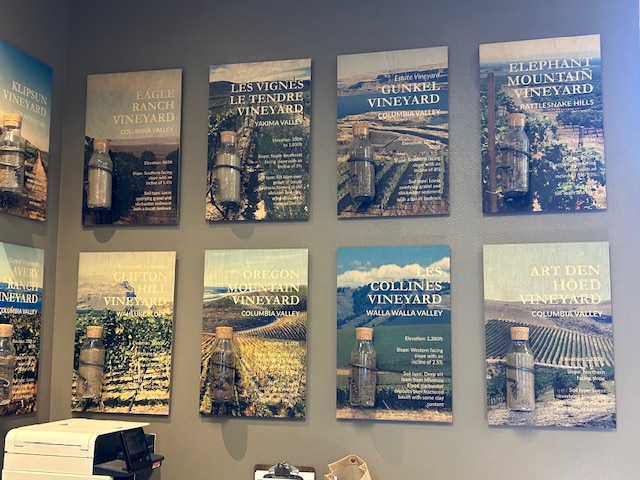
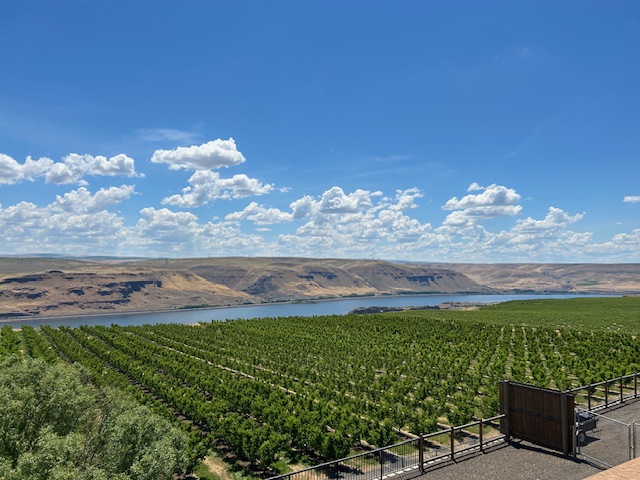
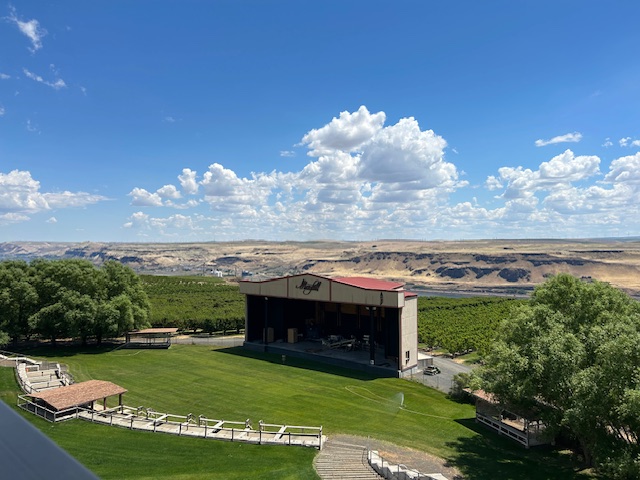

Above: Come to Washington for the wines, stay for the free lesson in geology! Pictured here are some images from Maryhill Winery, nestled high on the slopes of the staggeringly beautiful Columbia River Gorge AVA. One the things I love the most about this winery is their dog policy.
The trees, for example. Compared to evergreen Seattle, there are so few in Walla Walla. Did early pioneers chop them all down?
No, I discovered reading Whitman geology professor Bob Carson’s book about the region’s mountain range, “The Blues.” The lack of trees has everything to do with the region’s aspect in relation to the sun—due to the floods, naturally. Take one look at the south-facing slope on Red Mountain and the importance of aspect in Washington winegrowing comes quickly into focus.
The football-sized rocks I kept tripping over on a visit to a vineyard in Milton-Freewater? Giant chunks of basalt that once lined an ancient riverbed in Montana and now are believed to give those wines their distinctive funk.
And the loose, free range dirt kicking up dust everywhere? Not unhealthy soil, as I first assumed, but one of the area’s most defining features: glacial silt, or loess, deposited by the Missoula Floods.
Yet even with such glacial history, Washington state wine still struggles for wider recognition. What’s our unified regional identity? How can we encourage more wine tourism when Napa and Sonoma, for example, are better known?
I’m excited about the opportunity to learn and write more about Washington state wine to take on this unique challenge, to plunge into the vastness, and to mine the stories that express the unparalleled nature of this incredible, ever-evolving landscape.

 Gwendolyn Elliott
Leave a reply to Notes From a Fellowship – Gwendolyn Elliott Cancel reply