
[>>>>>Featured image: Red Willow Vineyard, October 2024<<<<<]
Mid winter is a quiet time in wine country. Some tasting rooms close for “winter break,” while others trim their operating hours to a post-holiday schedule. Seasonal staff and harvest interns are furloughed or off to their next adventure. It’s cellar season, with the rush of harvest and the breakneck speed of the vintage now mostly complete.
Before long, there will be trade and tasting events (like Taste Washington and Walla Walla on Tour), bud break, and the return of the tourist bustle. But for now, this short, sweet period is a much-deserved time to rest and recharge before the cycle begins again.
For a writer and sporadic tasting room associate like me, I’m using the time to reflect. I’m sketching out subjects for my “Wine Is a Food Group” column and chipping away at a long list of interviews; organizing two upcoming trips; finishing up a long-overdue upstairs bathroom refresh, and doing my best to appreciate the beauty and calm of the season.
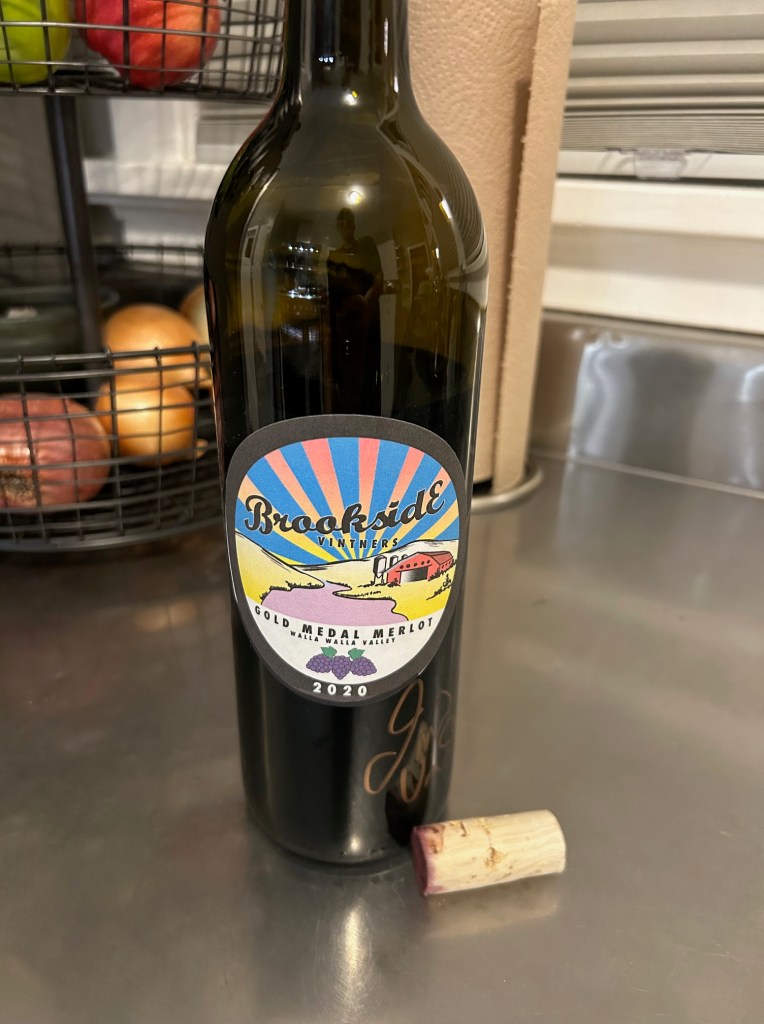
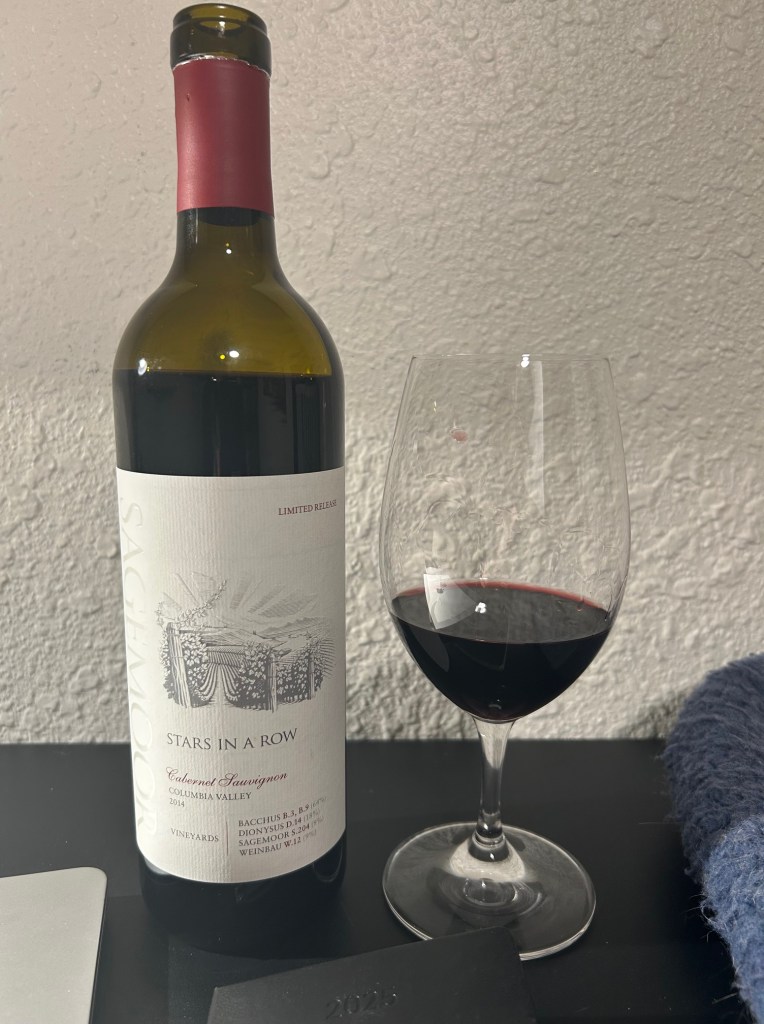
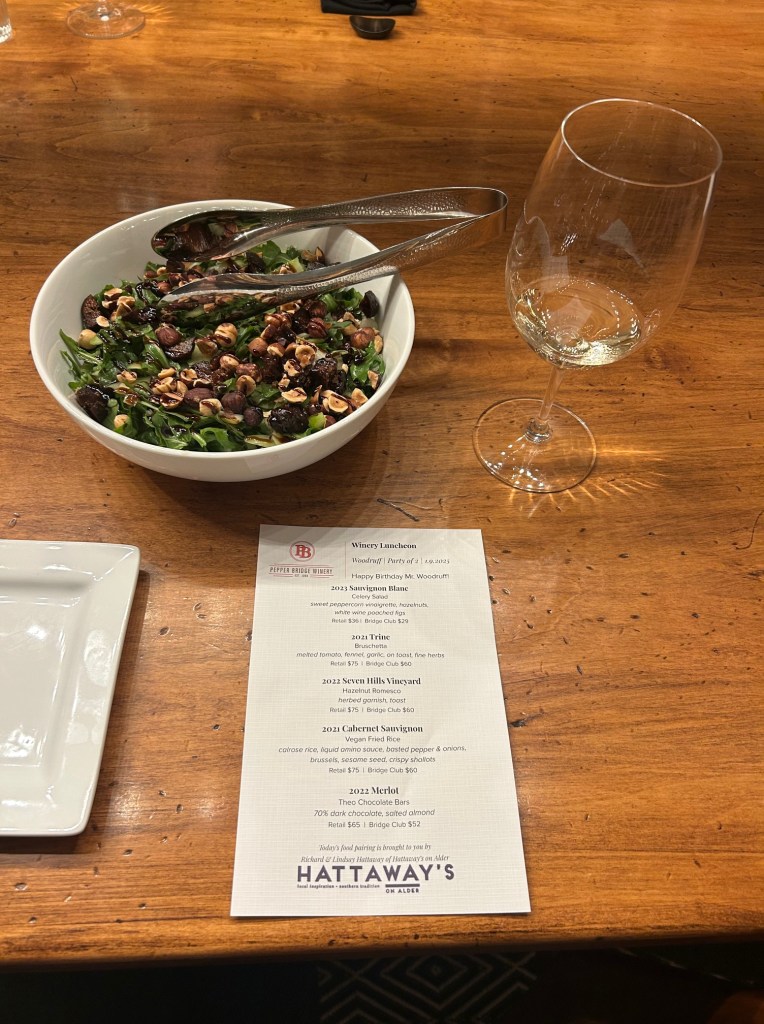
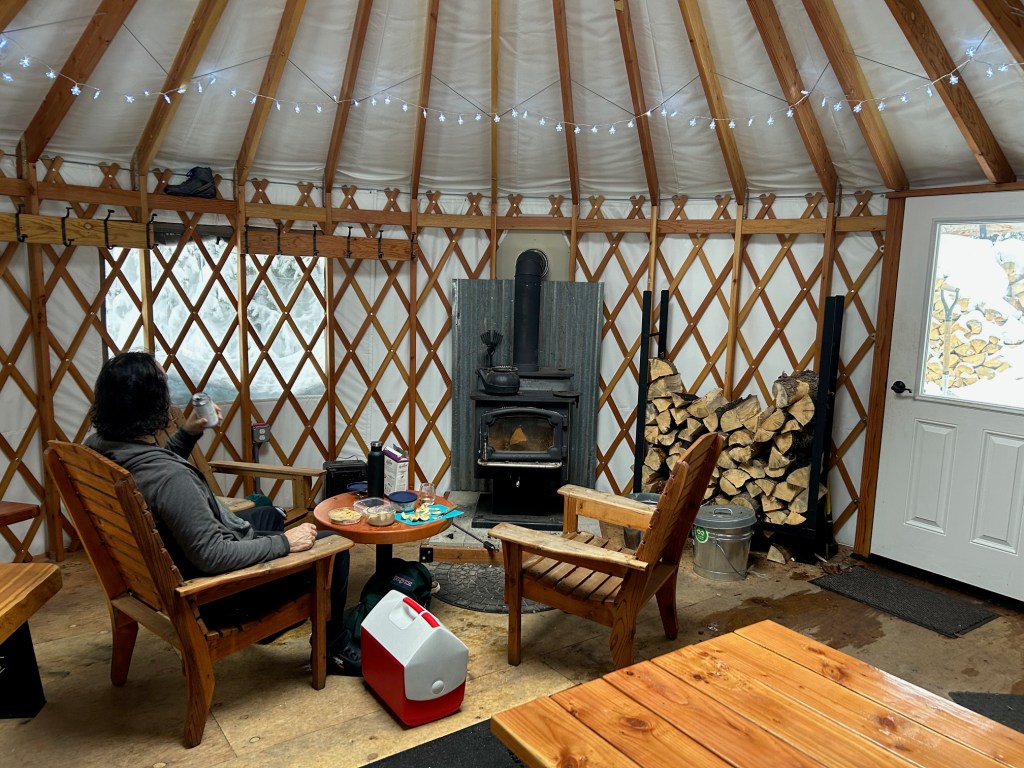
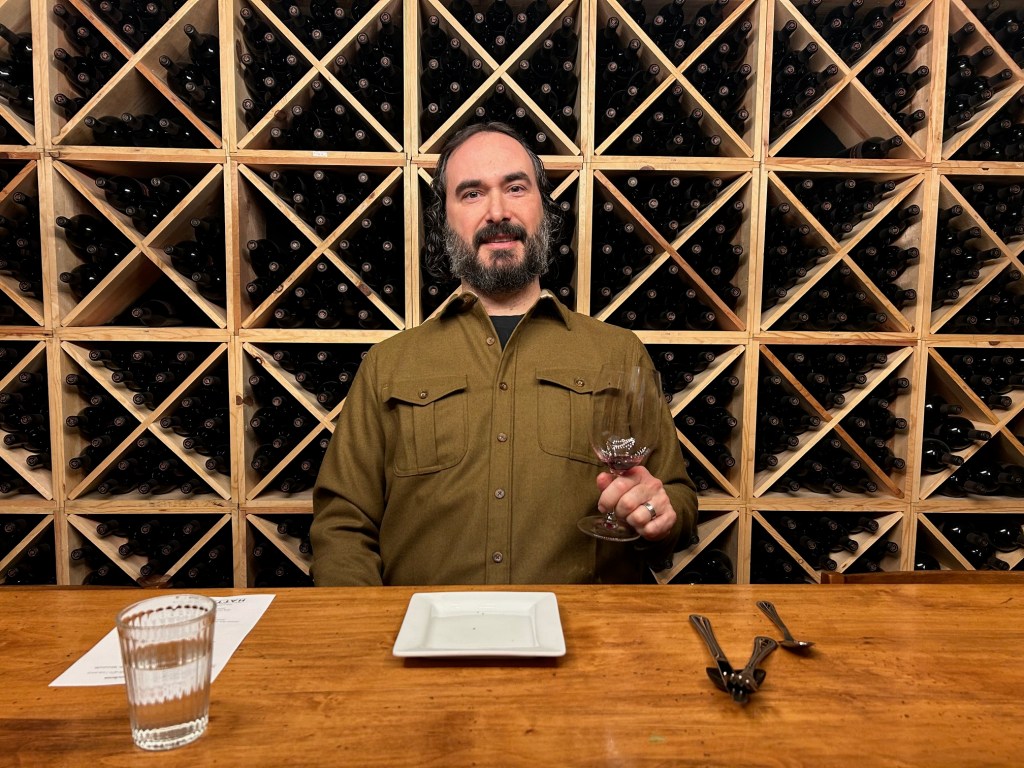
As usual, wine is a part of our lives that enhances and refreshes the journey nearly every day. Whether it’s through thoughtful food and wine pairings at Pepper Bridge’s Veganuary Winery Luncheon to celebrate Toby’s birthday; cracking a cold 375 ml can of Alexandria Nicole’s 2022 Adulting White in a yurt after a satisfying day on the Nordic trails; as delicious “work juice” for a writing project; or trying a friend’s homemade vintage, wine helps us celebrate life and capture its special moments.
Newly published related reading at Visit Walla Walla:
🌱🥕 How to Celebrate Veganuary in Walla Walla 🥕 🌱
🍇 ⛷️Sip and Savor the Season at Southside Snow Day ⛷️🍇
I was surprised and delighted to see a few of my special moments depicted in an email sent out last week from the Washington Wine Commission—its 2024 #WAwine Media Insights Report—and encouraged to see that media mentions of Washington wine were up 5% over last year. I hope I’ll be able to contribute positively to this trend this year.
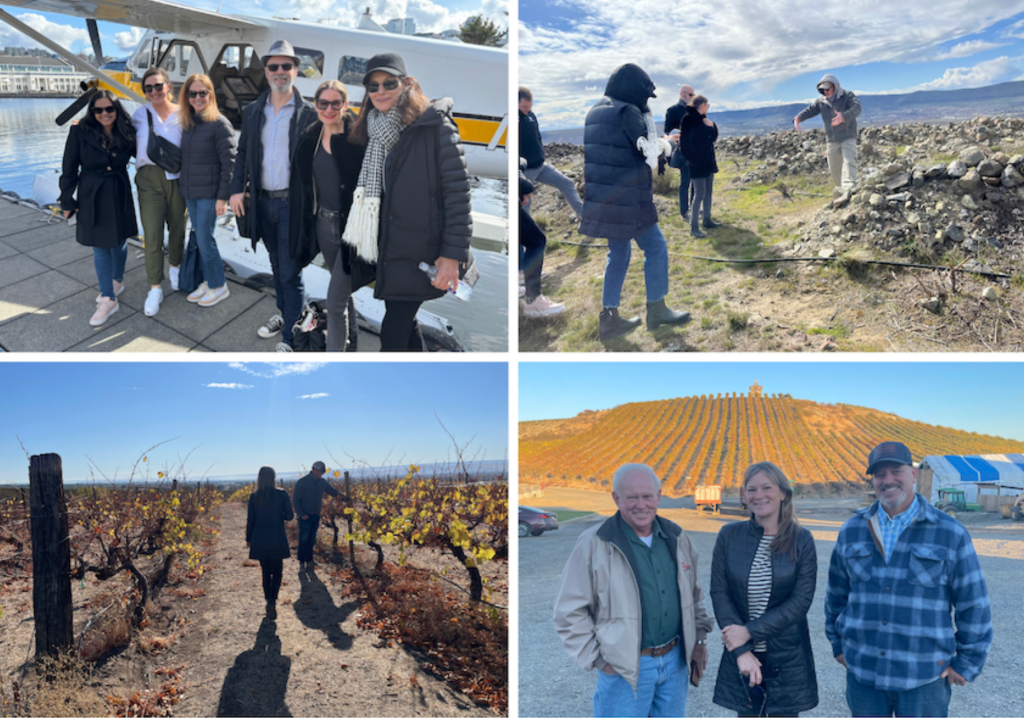
Above, bottom left, I’m pictured at a vineyard in Rattlesnake Hills (along with its original, gnarled vines allegedly planted by father of Washington wine, Walter Clore) with Patrick Rawn, vineyard manager for Two Mountain Winery (so named for the two mountain peaks, Mt. Adams and Mt. Rainier, visible from the winery’s estate Copeland Vineyard). Here I learned there are no snakes, per se—the AVA’s namesake refers to the distinctive humps of nearby ridge, the Rattlesnake Hills. And because of the AVA’s notable elevation (from 850 to 3,085 feet), prime southwest aspect, and geography insulated by mountains and ridges, frost and hard freezes are historically not an issue (as have been in Walla Walla, for example).
At bottom right, I’m with Mike (left) and Jonathan Sauer, grape growers at the famous Red Willow Vineyard in White Swan. This was the end of the day of my second to last itinerary on the trip. I was tired, and this particular vineyard, as far west as you can go in the Yakima AVA, was a haul to get to. It’s surrounded by gently rolling fields, rural scenery, and agriculture—but there’s not another vineyard for miles. I wondered why, especially given the prestige of this site and its acclaimed partners such as DeLille, Betz, Gramercy, Kobayashi, Avennia, and others.
I learned that the property, a 4th generation family farm dating back to the 1920s (that Mike began converting into a vineyard in the ’70s), is essentially grandfathered into the Yakama Indian Reservation. So, Red Willow vineyard is truly unique in its physical location not just for the exceptional fruit grown there (thanks to its elevation between 1100–1300 feet and a range of soil types, including ancient pumice-loaded volcanic terroir in the Peninsula block, the result of the Ellensburg Formation), but that it’s the only vineyard that can actually exist there.
Plus, the management of and practices at the vineyard are very people-focused. The stone chapel at the very top was built by hand, from rocks uncovered as the property was being developed. Every row of its approximately 150 acres are hand-harvested. Lining the walls of the utilitarian barn office is a photo collection honoring all the people who helped advise, build, or champion the site—people like David Lake, the UC Davis-educated Master of Wine who helped Mike figure out what to plant, and where (and eventually became longtime head winemaker for Columbia); Walter Clore; Jancis Robinson, Bob Betz, and others.
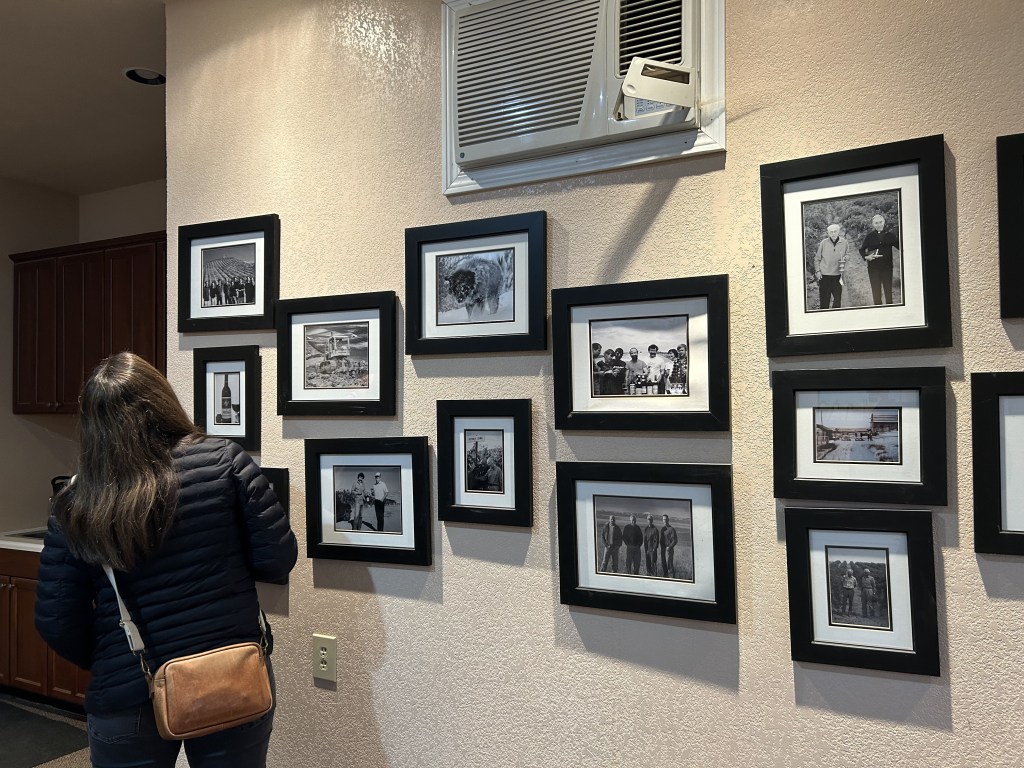
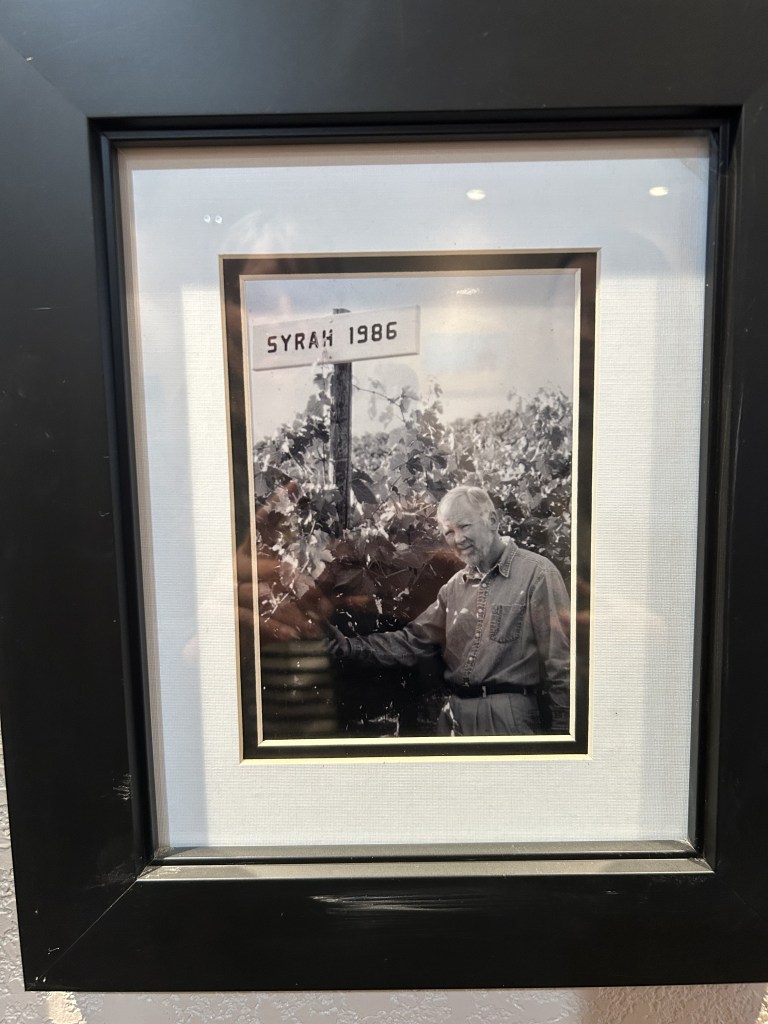
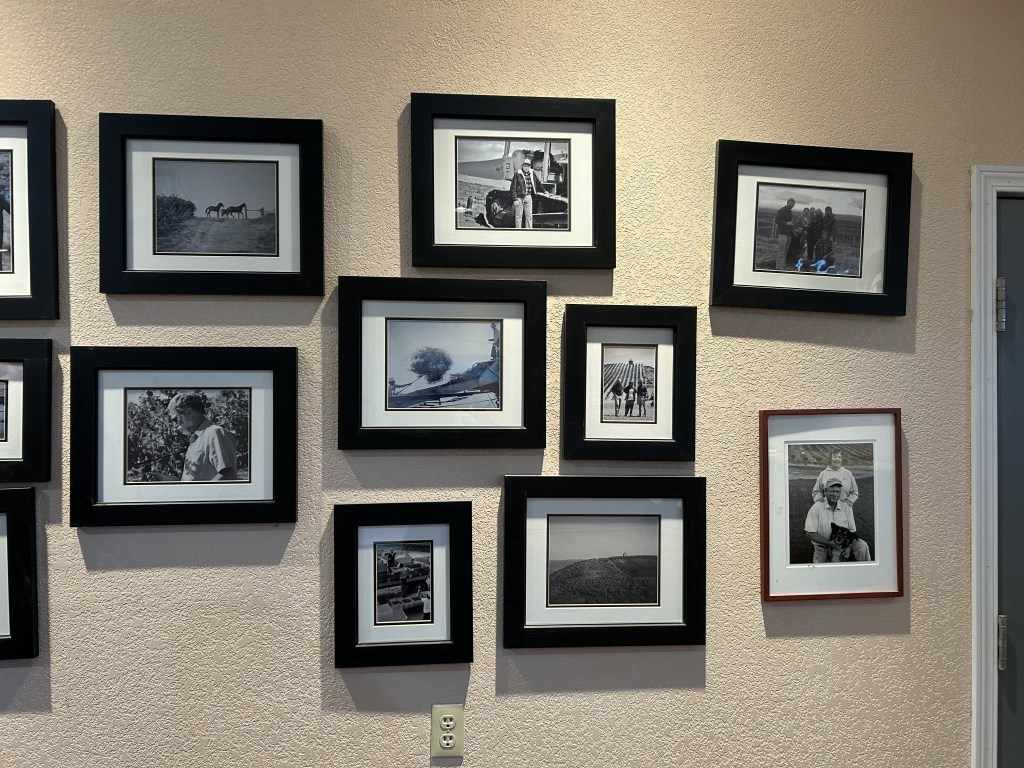
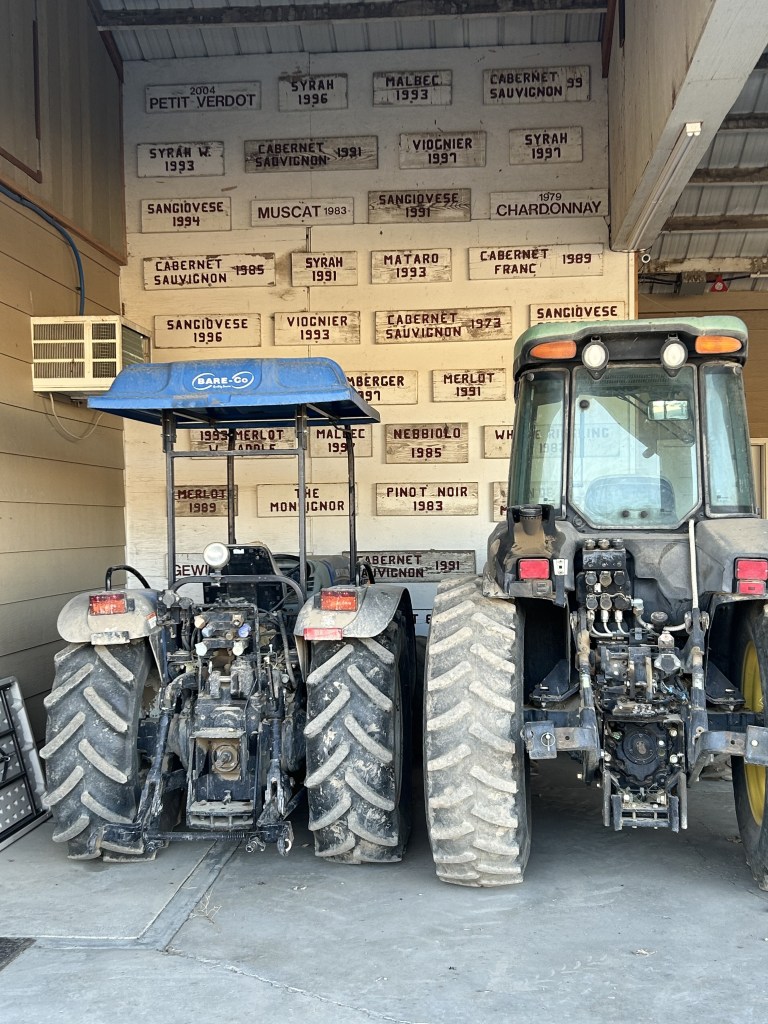
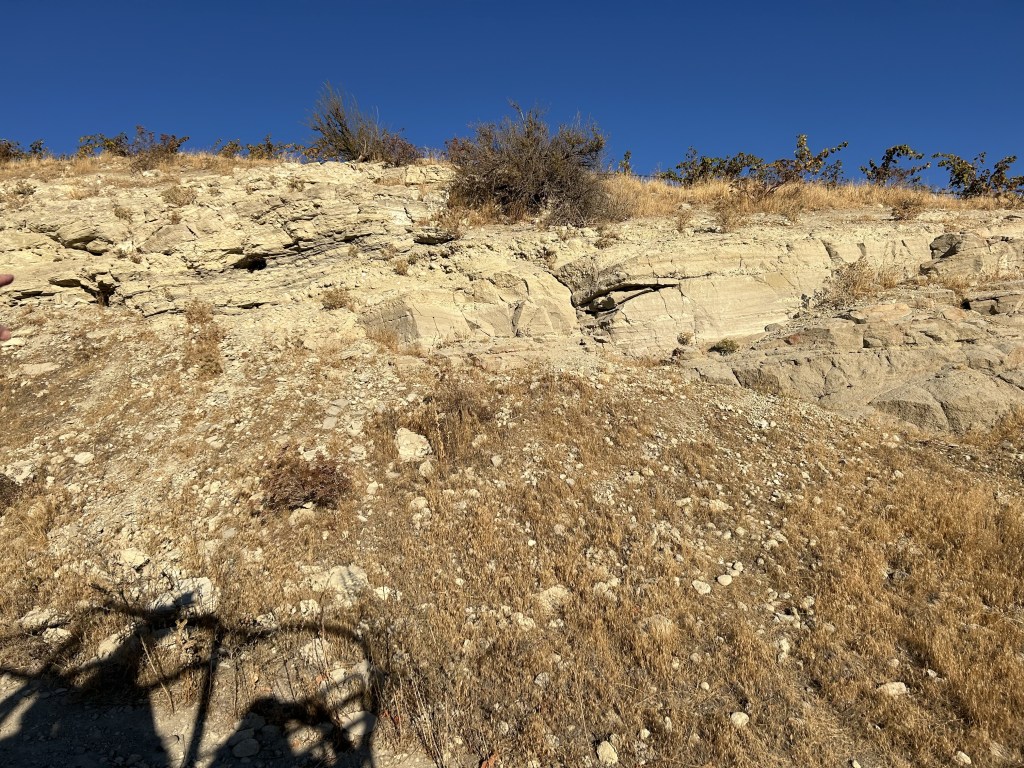
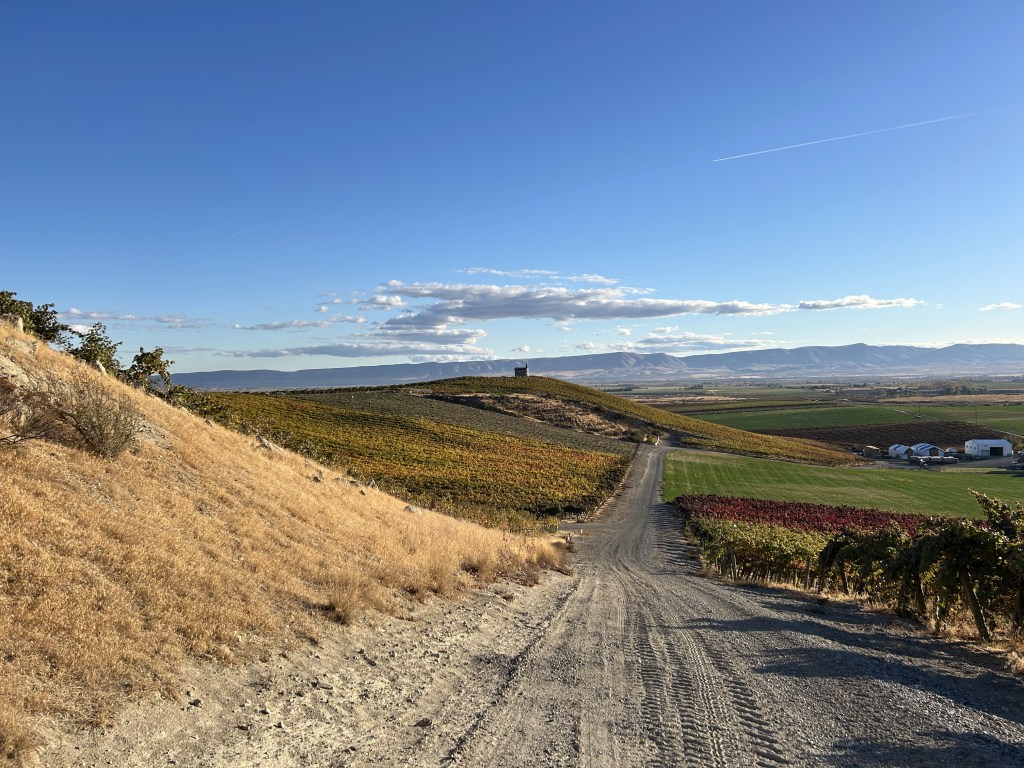
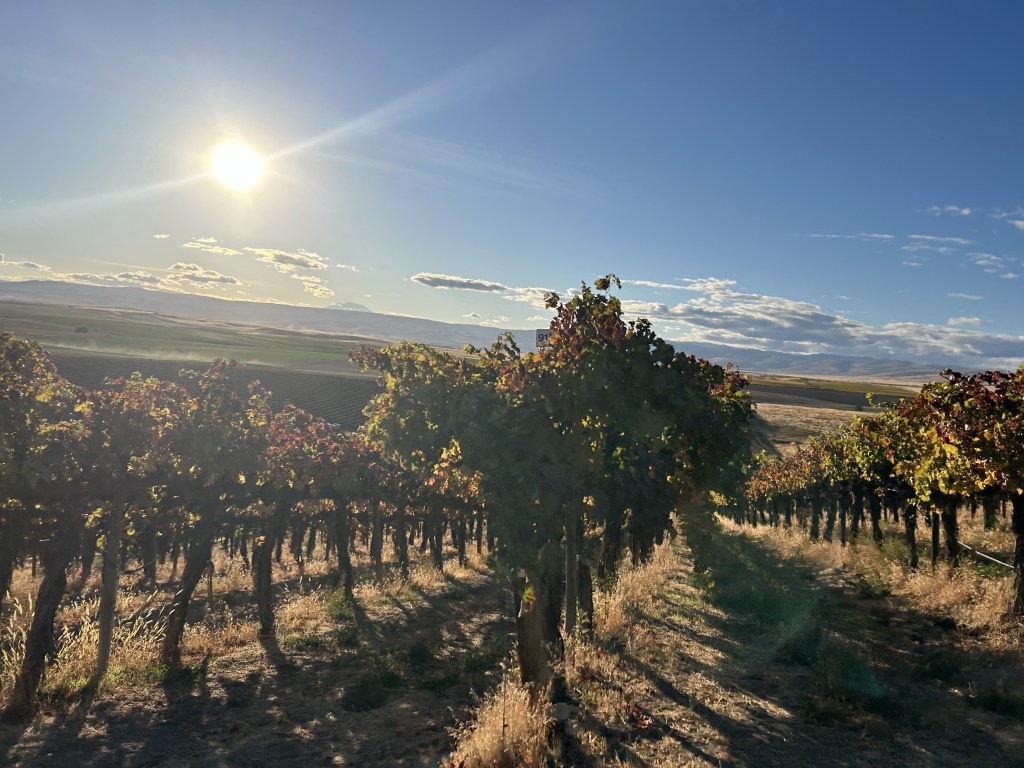
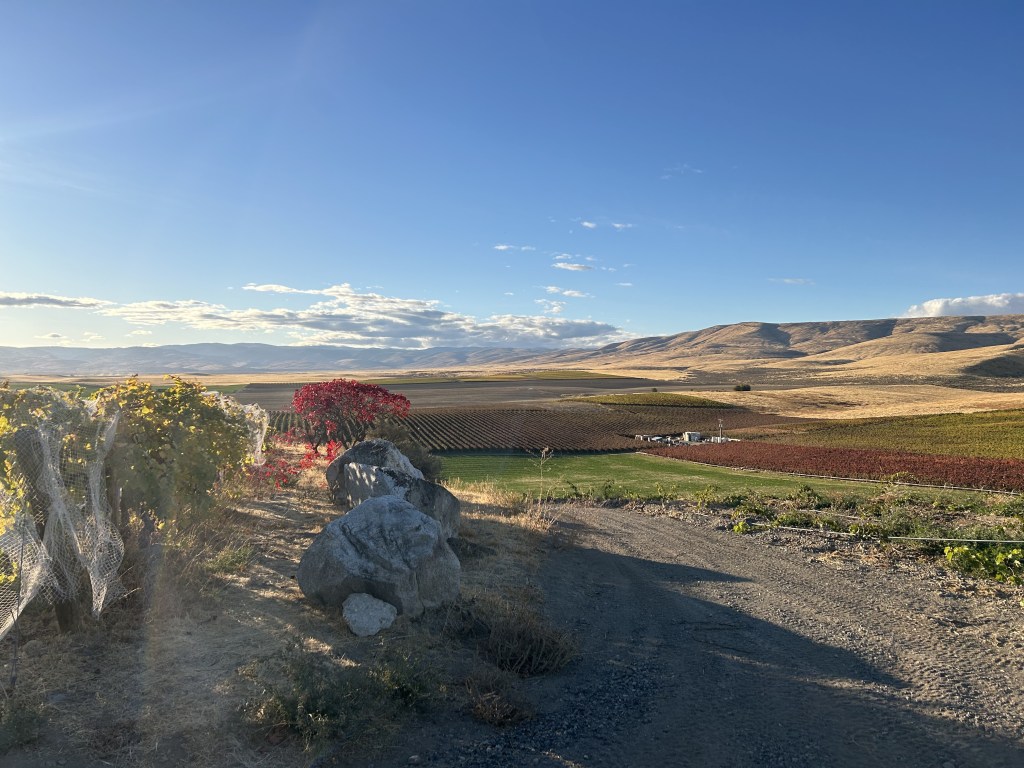
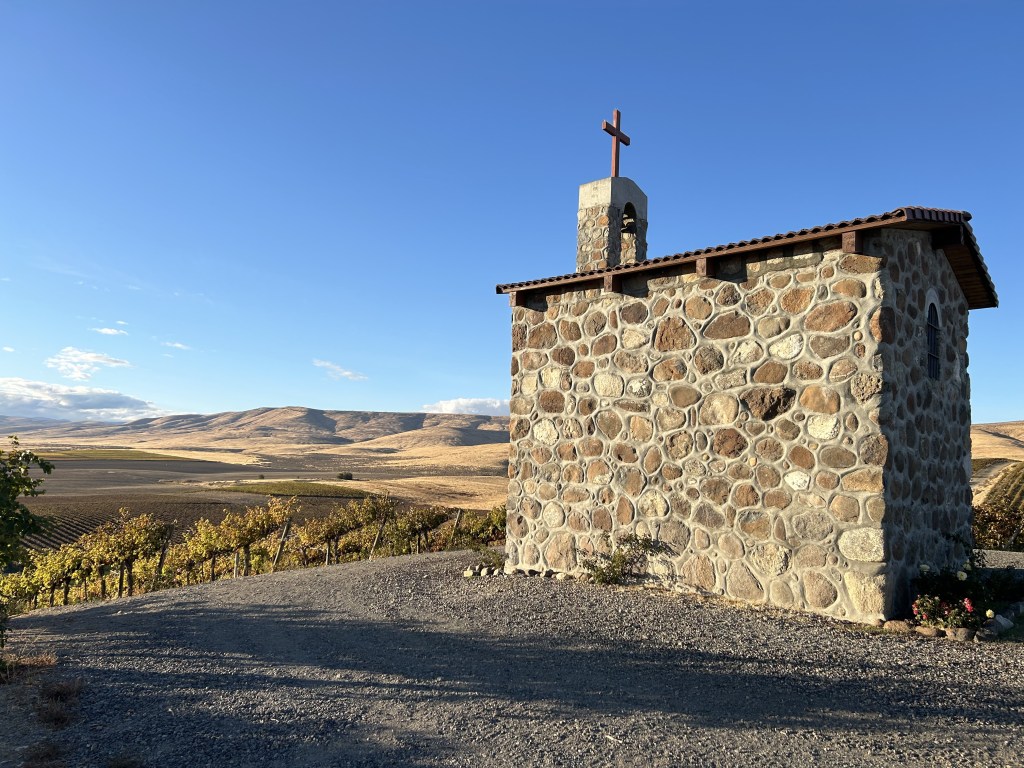
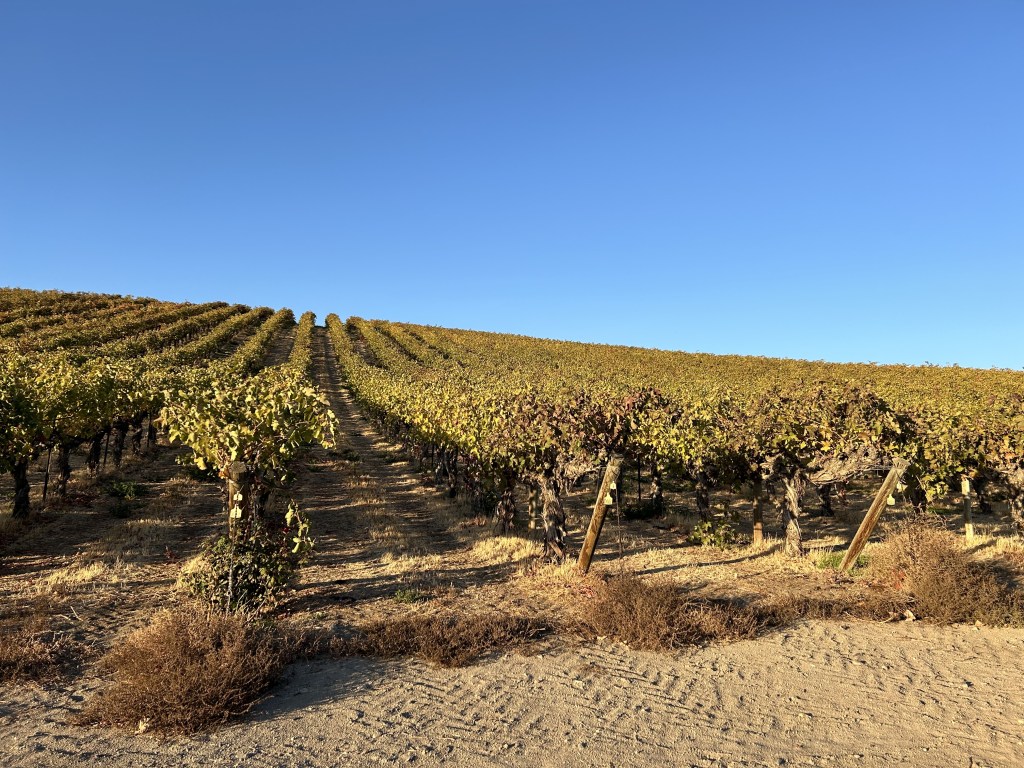
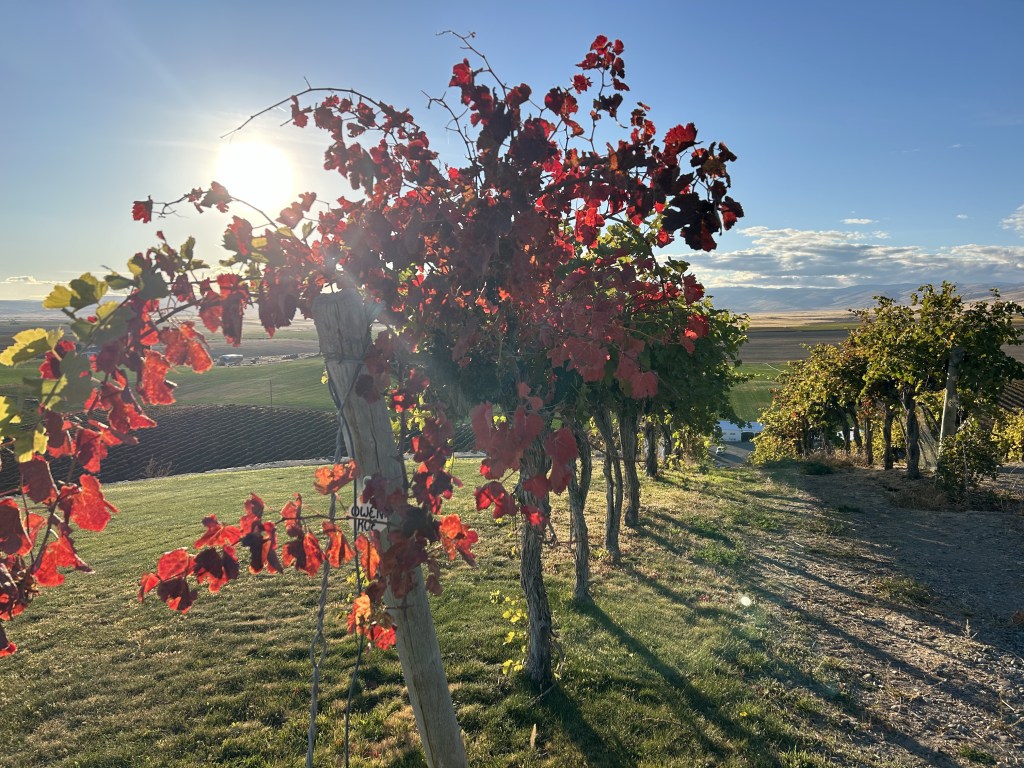
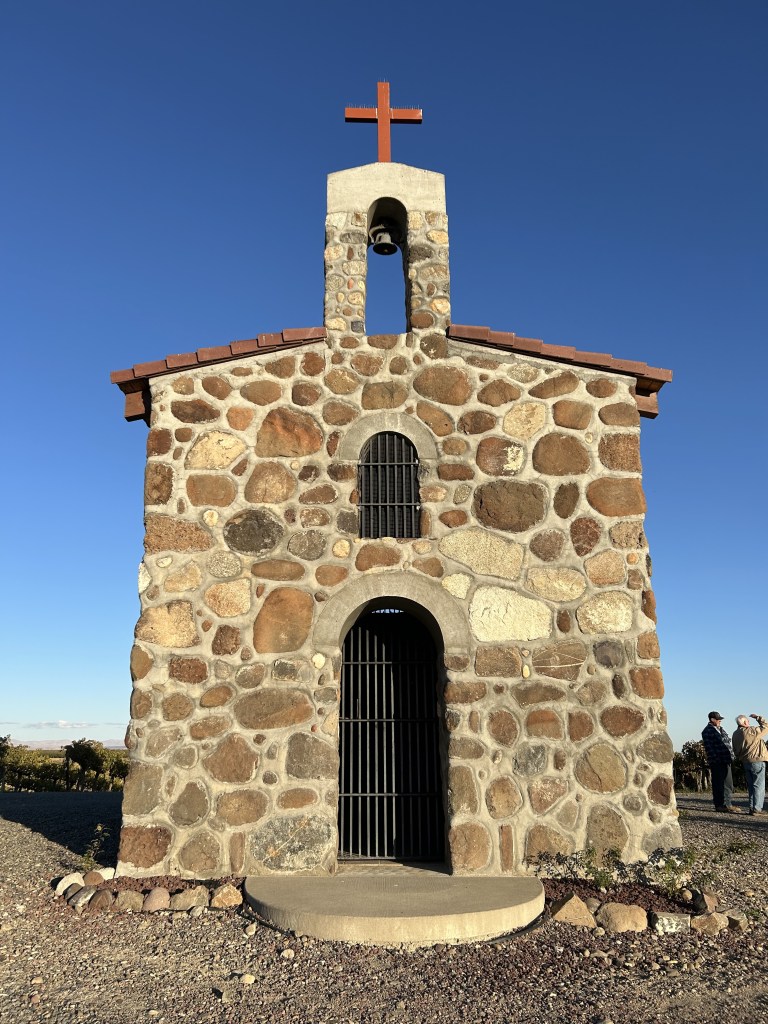
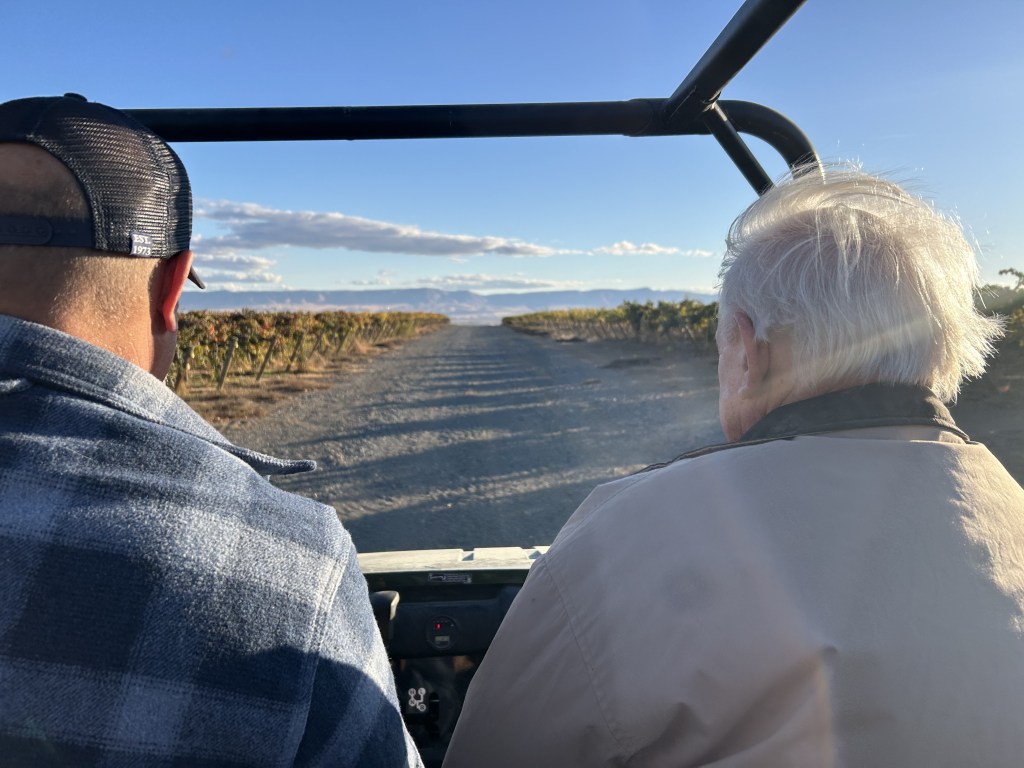
In their easy, personable way of talking, Mike and Jonathan express an honest reverence for the people power that goes into wine. Between this and the 360 degree view of the sprawling valley below the top of Chapel block—one that might occasionally include a small herd of wild horses in the distance—it’s easy to understand why Red Willow vineyard is so revered.
Mike Sauer in particular has a spiritual way of talking about his work and the people, land, and winemaking craft that gets bottled into it. We talked about it at the vineyard, but there’s a nice quote from him on the website that I’ve copied below. It’s a quiet contemplation, for a quiet time.
“In farming there is no substitute for the soil, water, and hard work. Inherently, the nature of farming brings a spiritual dimension to our efforts. There is a connection of past, present, and future generations.
For us wine brings the soil, the site, the season, and the efforts of many people together into a single vintage. Later that vintage becomes a cherished memory of that year.”
—Mike Sauer


 Gwendolyn Elliott
Leave a reply to Stacie Pike Cancel reply