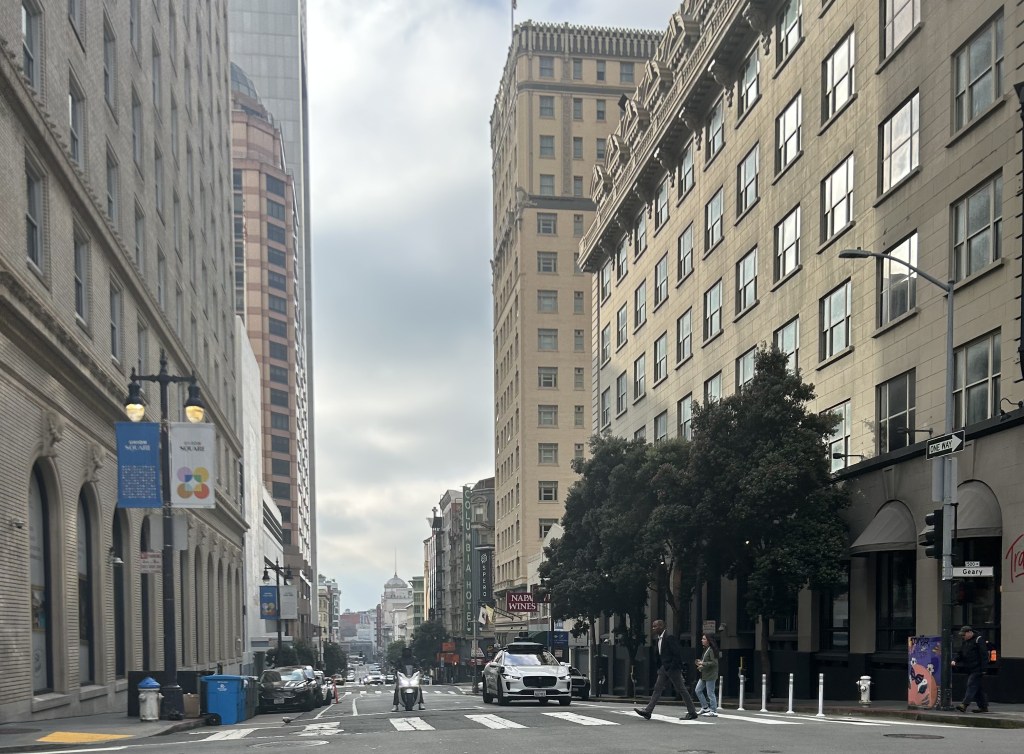
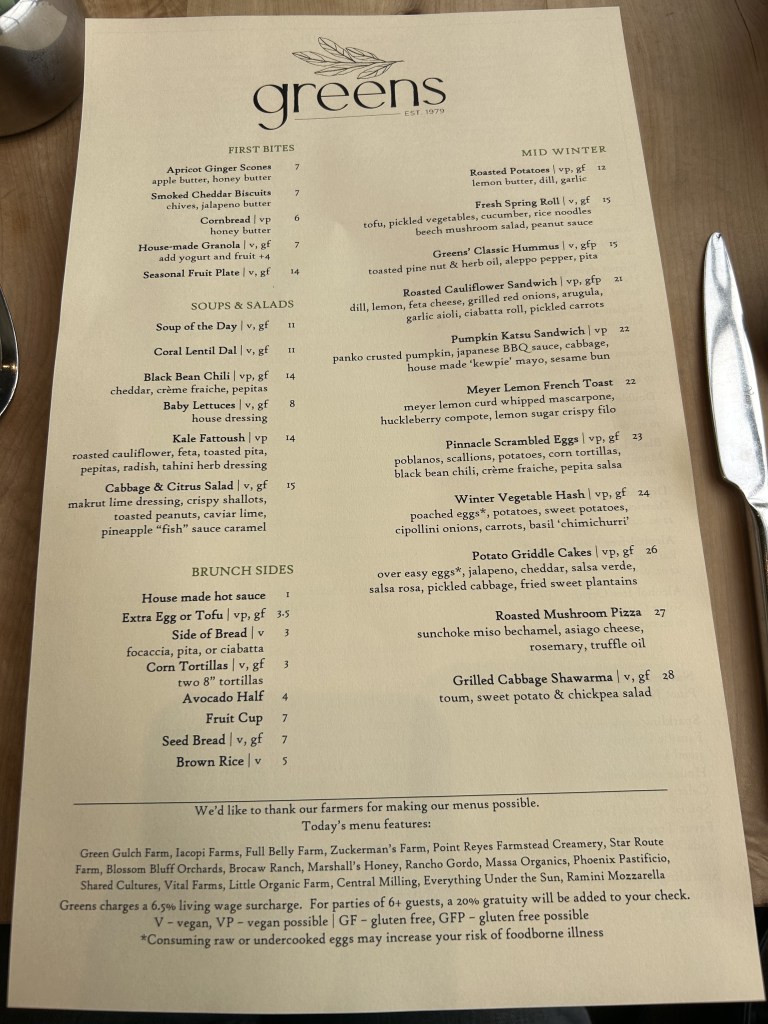
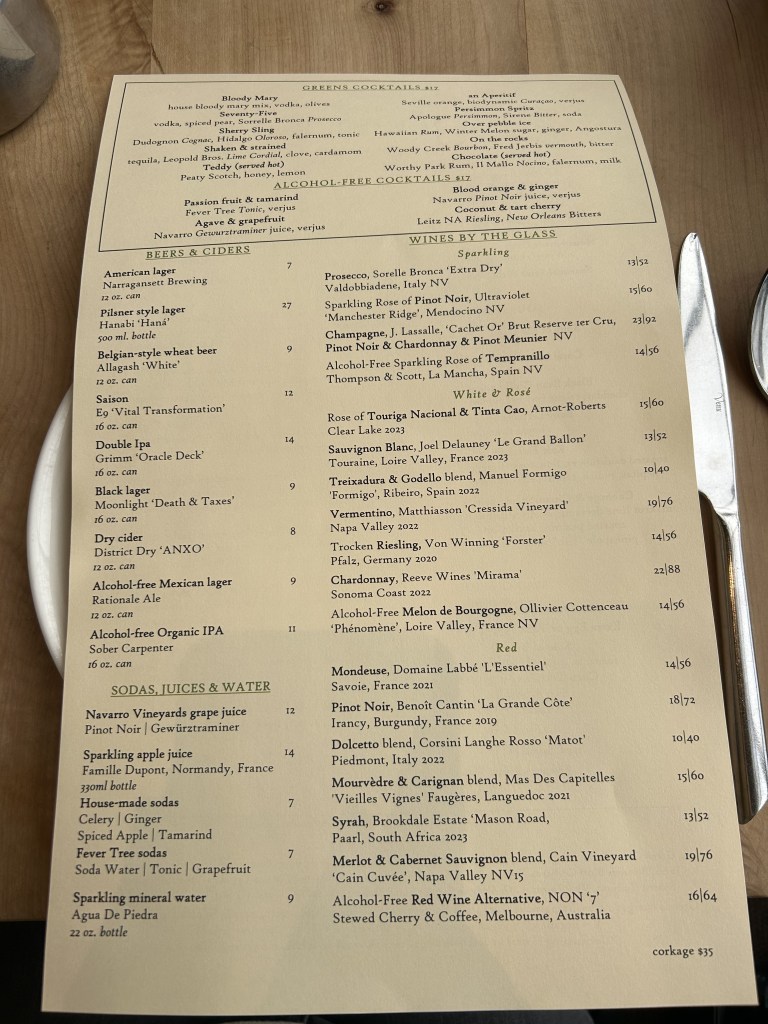
Last week, I tagged along with Toby for a work trip to Napa. We spent a few quick days in San Francisco first—where the number of autonomous cars now make the city’s trolleys resemble horse and buggies—and had a wonderful meal at vegetarian destination Greens, which has been closed or under construction during our last few visits to the area.
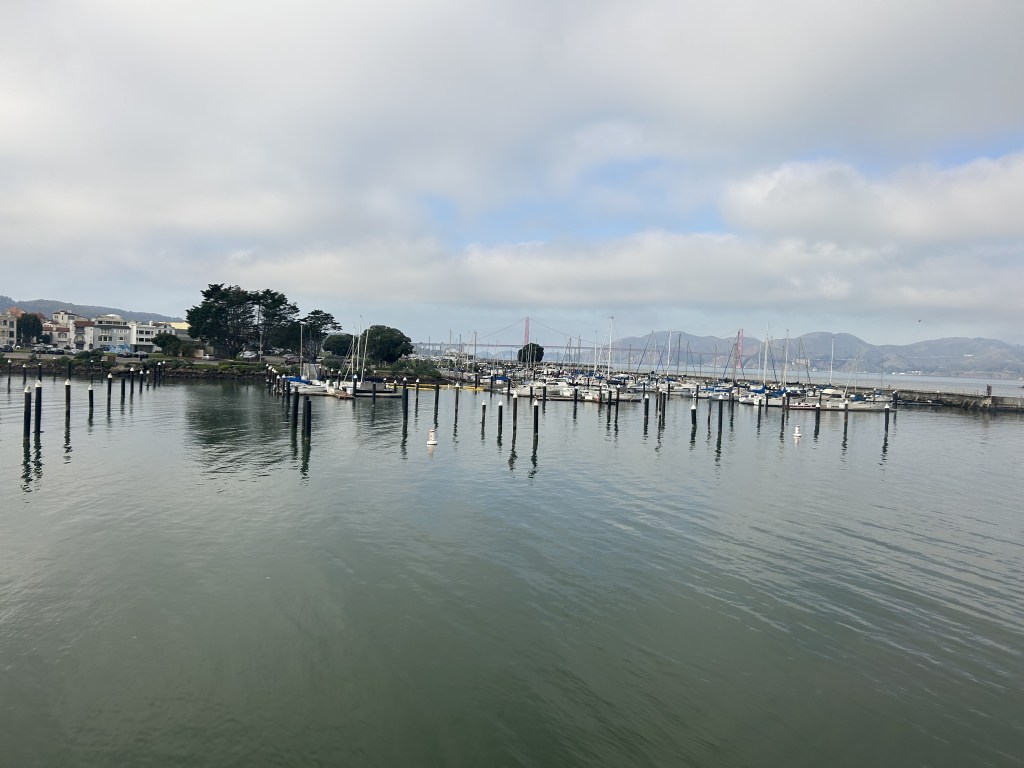
Perched in a century-old building on the pier at Fort Mason, our view from table #1 overlooked a handful of playful harbor seals, and swept out to the bay and beyond to the Golden Gate Bridge. I don’t know if I’ve ever eaten as sideways as I did that day—the table was in front of me, but the view squarely to my right.
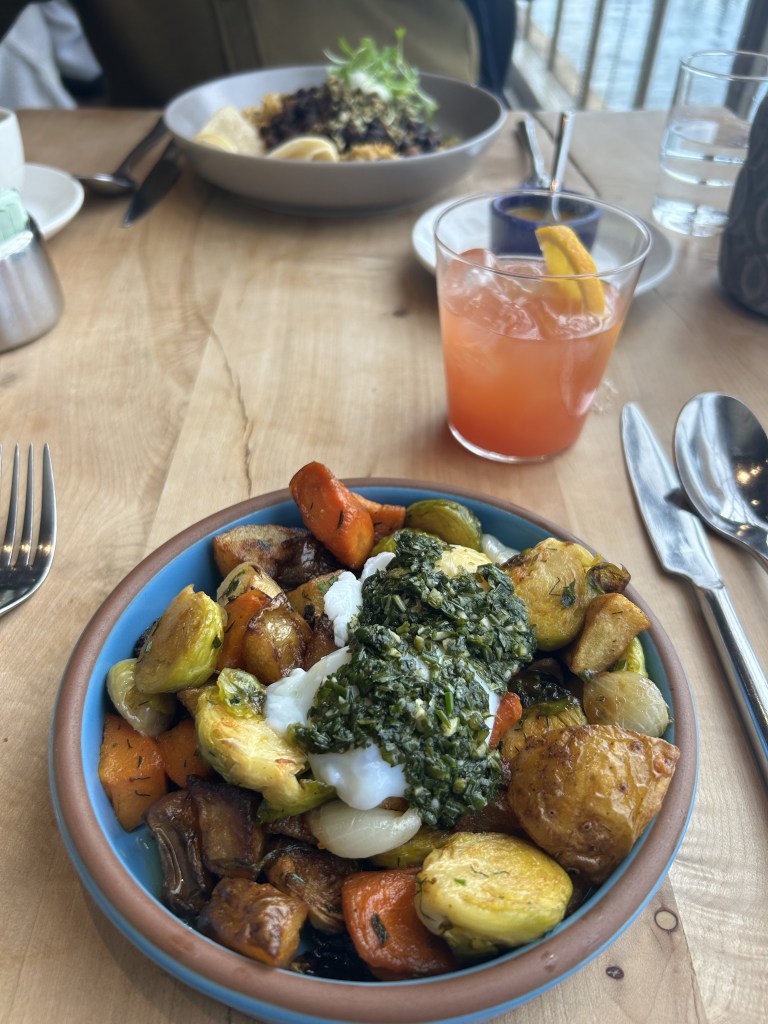
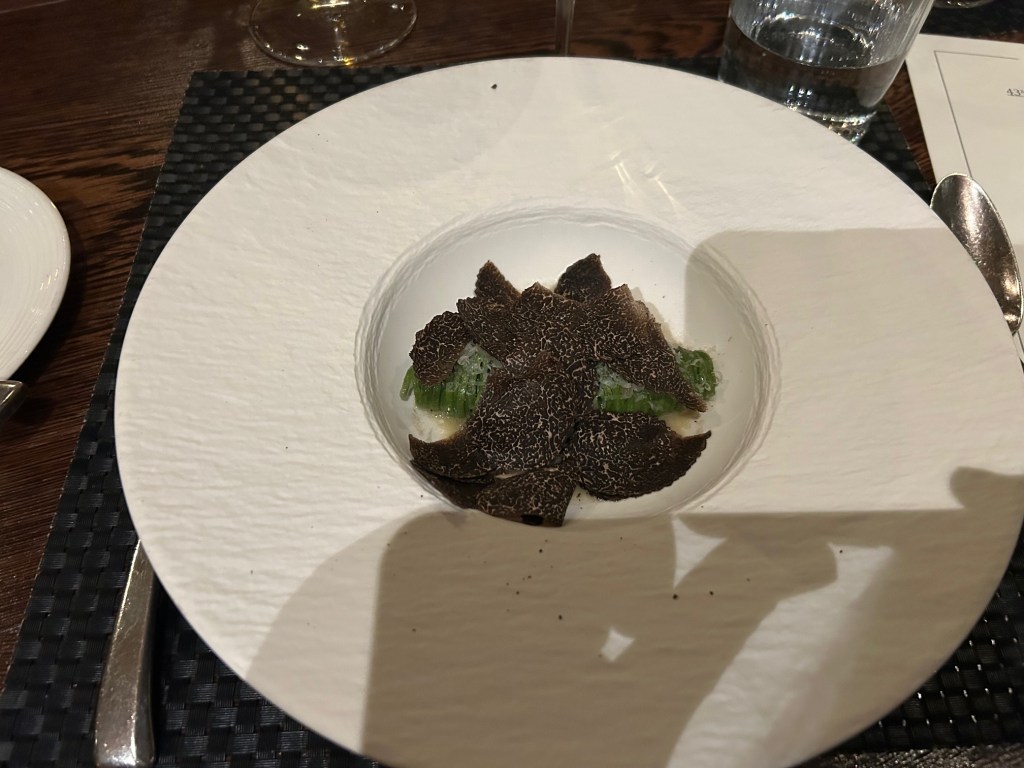
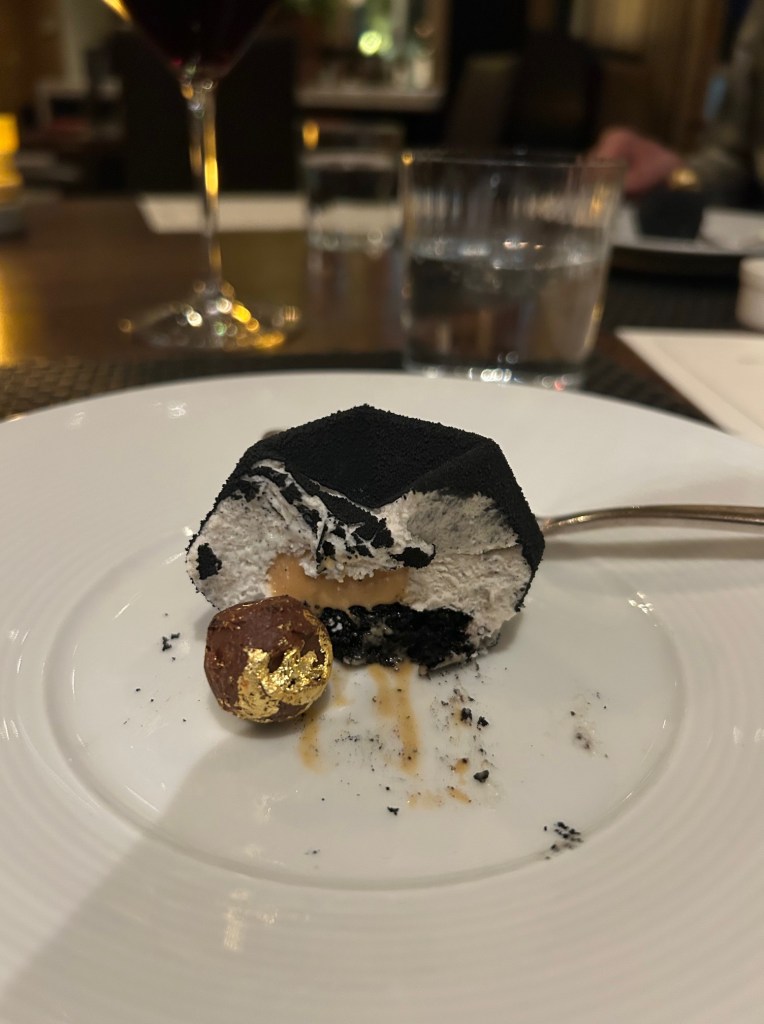
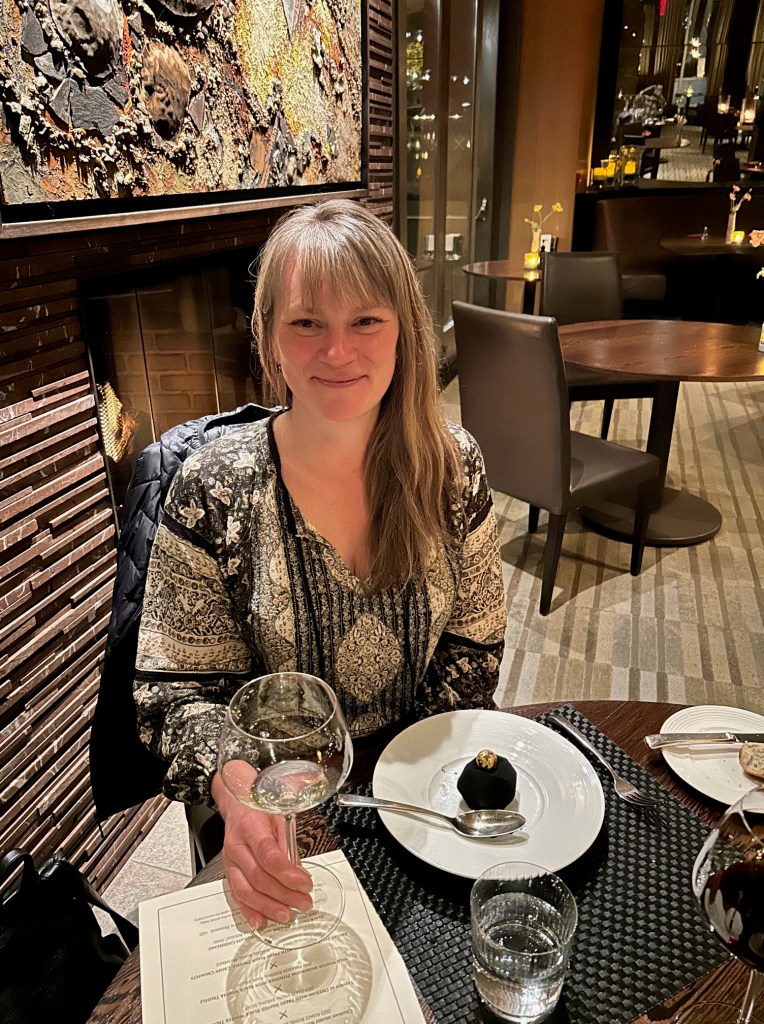
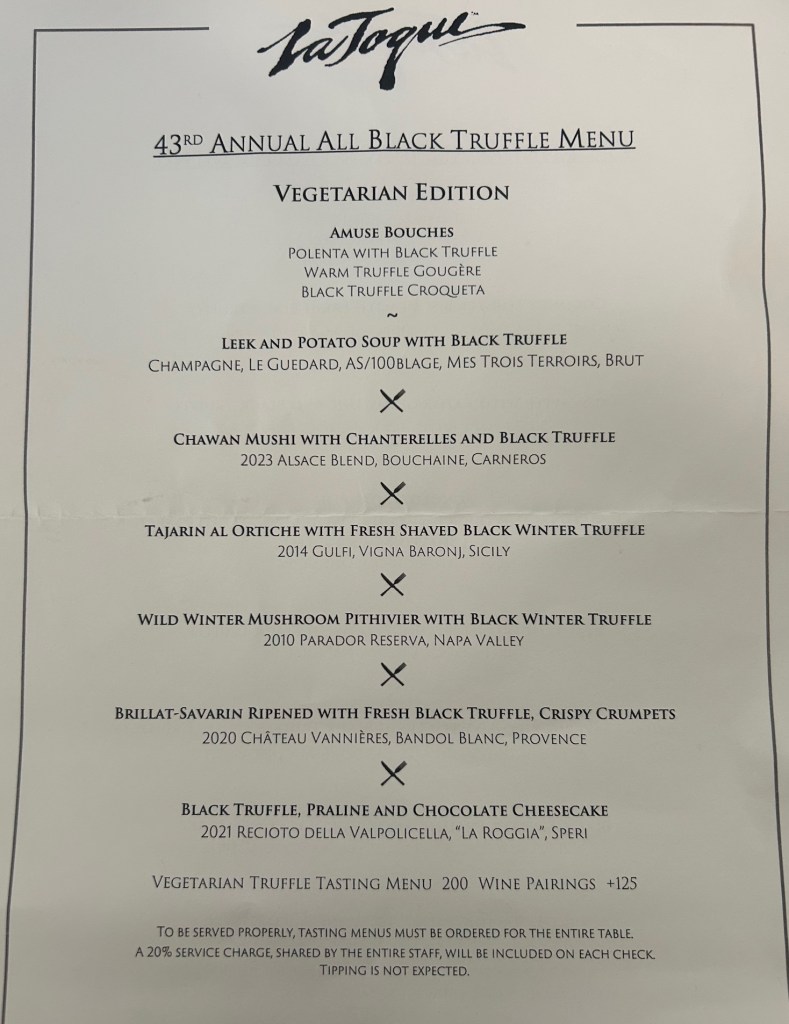
We cruised up to Napa in a rental Chevy Bolt, enjoyed mud baths and a relaxing day at Indian Springs in Calistoga, and took in a few truffle-themed experiences, part of the Napa Truffle Festival taking place during our visit. This included a return to La Toque for a truffle-loaded vegetarian tasting menu—an absolute steal compared to similar menus offered in the area. The days were sunny and in the 60s, a welcome change from Walla Walla’s recent cold snap.

and hours in the 100 degree geyser-fed pool, was near bliss.
When visiting other wine regions, you can’t help but compare yours (at least, I can’t), and how the food, restaurants, wines, weather, and culture stack up. Obviously, Napa has a lot going for it—there’s talk in the wine business about the benefits of “getting there first,” as Napa was to American wine. That fact alone means an endless game of catch up and “Hey, look over here!” for what-came-after wine regions like Washington.
At Red Willow, Mike Sauer talked about Allen Shoup, and how he would say (I paraphrase), “In an all-out slugging match, California wins every time.” In other words, the reputation and sheer size of California’s wine market—not to mention its easy access to large urban areas and dime a dozen Michelin-starred restaurants—is too established, accessible, and renown to ever make a comparison apples to apples.
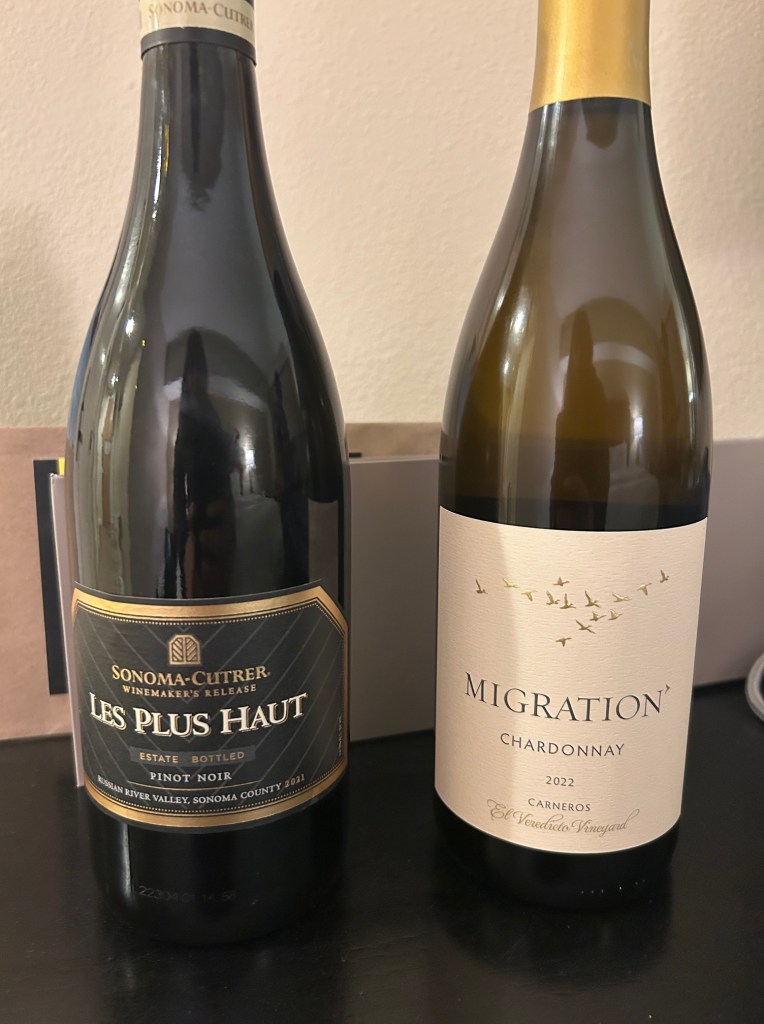
Still, I imagine, perhaps to the ire of some long-lived locals, a more-bustling Walla Walla with day spas and wood-fired pizza restaurants, a bagel shop, a wine bar (no, we don’t have one), a functioning historic theatre (like this one in Sonoma) to screen foreign and independent films, more small to mid-sized live music venues, more places to dance, and more vegetarian and vegan-friendly restaurants (i.e. like Napa).
Until the Tri-Cities transforms into a hotbed of society on par with San Francisco—and for a lot of other geographic and cultural reasons—Walla Walla will never be Napa. Napa in blue jeans, as my former boss Mike Seely once wrote—we’re getting warmer. Or, as a friend told me recently: “Washington wine is the best friend you never knew you had.” She’s originally from San Francisco, and quipped this when I asked her how she describes Washington wines to her California family and friends.
Nor should Walla Walla aspire to be anything other than what it is—with its $150 tasting fees, corporate consolidation, and steady stream of winery-against-winery lawsuits, Napa seems to be in the late stages of “getting there first.”
Perspective—this is what I love about traveling anywhere. The chance to see and think about things from a different point of view. It got me thinking if California wins in an all-out slugging match, then maybe Walla Walla succeeds simply by living up to its reputation for playing nice (so nice, you know, they named us twice).
In this contemplative mind, I found myself considering yet more perspective—one from a place I could imagine, and one I had not given much thought to.
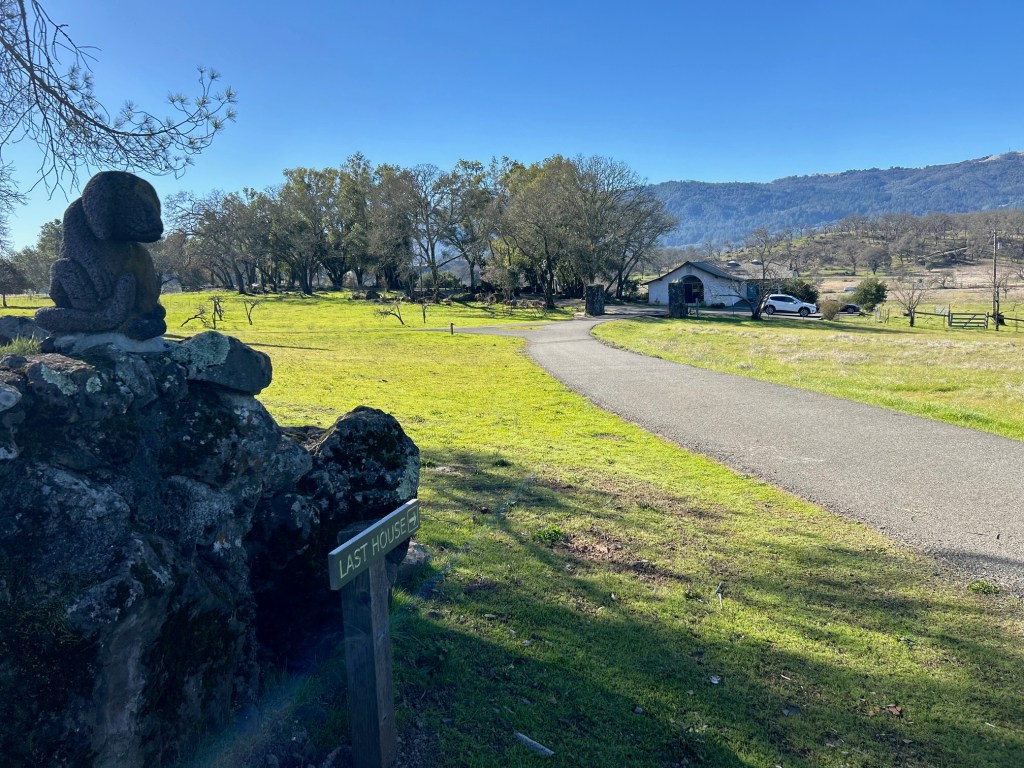
Our last day of the trip, we drove to a nature preserve in Sonoma. I’ll drive miles for sandhill cranes (Richland, WA) and wild zebras (San Simeon, CA) and even track the neurotic squawks of San Francisco’s wild parrots on foot, but this day we were driving to a writer’s house: M.F.K. Fisher’s “Last House” at the Bouverie Nature Preserve in Glen Ellen. A writer’s custom-built house, nestled on a gentle slope surrounded by gnarled California oaks and wild grasses—it was hard to picture anything more beautiful or inspiring.
Fisher is known for her dualistic understanding of food: food as a basic need, a bedrock of human culture, as necessary to life as breathing. And food as pleasure, art, a palette for creativity, resourcefulness, fun, celebration. (Her Wikipedia entry is a great place to get a feel for her fascinating life, and “How to Cook a Wolf,” perhaps her most famous work, is a great place to get a feel for her writing style.)
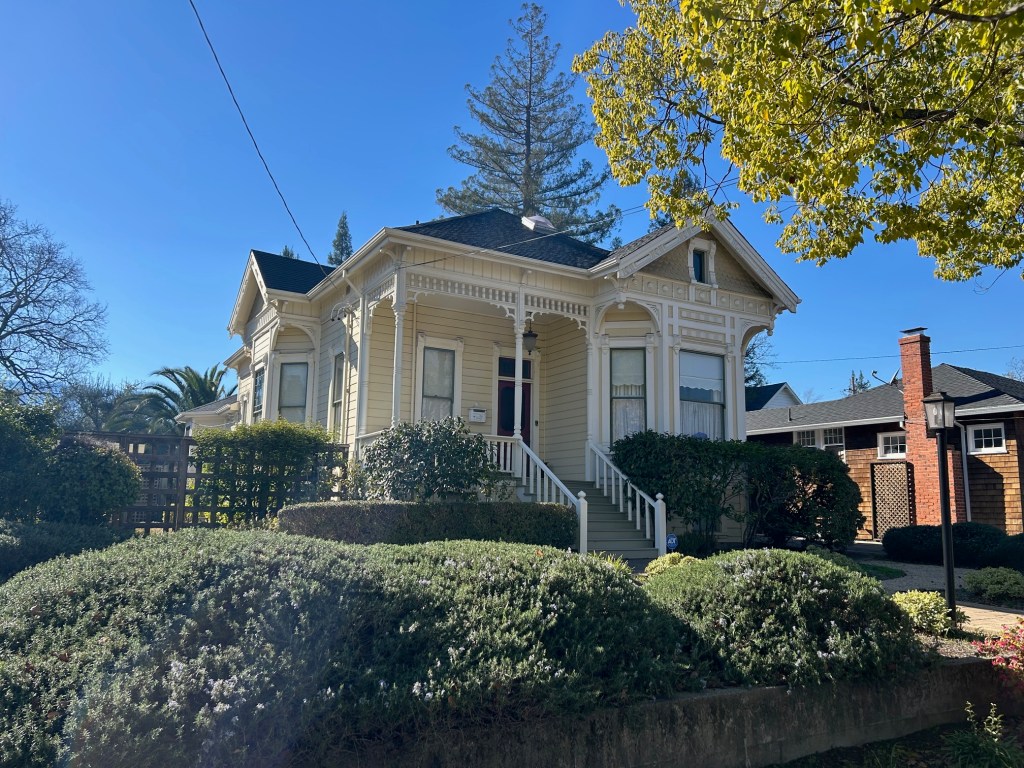
The day before, I tracked down the St. Helena house where the famous writer (and co-founder, with James Beard, of the Napa Valley Wine Library) lived before she sold it to finance the construction of Last House. The home is a private residence so I didn’t want to be weird: I snapped a photo and went on my way. Just seeing it beautifully maintained and walking in her footsteps was enough.
Later, during the tour of Last House, we were allowed to take photos but were asked not to share them. All I can say is: if you like food writing, wine country, nature, and find yourself in Sonoma—you should go (here’s how). In fact, if you can ever tour the house of a writer or artist you admire—do it.
Being among a writer’s prized personal possessions, observing their decor and style, being under the same roof where they lived and worked—such spaces feel sacred, still filled with spirit. (Knowing Julia Child, Jacques Pepin, and Maya Angelou, among others, visited Last House helps add to the feeling.)
“There is a communion of more than bodies when bread is broken and wine drunk,” Fisher wrote in “The Gastronomical Me.” I wondered to Toby if there will ever come a time, when glutenous bread is banned and wine illegal, if food itself—all our salads and casseroles and roasts and pies—will become a thing of the past, when the trendy, tech-forward class will ask, “You’re not still eating food, are you?” He thought this was silly, but I was serious.
Once home, a piece I wrote about Elizabeth Bourcier, who for 16 years worked in various wine roles, eventually head winemaker, at Bionic Wines, was published. As I wrote in it, “The Mother Load,” Bourcier did what some people in the business advised her not to: she started a family.
Her perspective was a wake-up call for little ol’ childless-by-choice me. Women seem to be everywhere in winemaking and wine growing. It never occurred to me just how impossible it would be to be pregnant, with another child at home—and still be expected to taste and evaluate wine—not just because of the effects of alcohol, but because of a pregnant person’s altered sense of taste and smell. So much of a winemaker’s job is sensory, physiological—as I learned from talking with Bourcier, and after some reading, there are few resources to help keep top women winemakers in their roles once they start a family.
I’ll continue to mine for these points of view in my writing. I hope they yield stories that are rarely told, or just insightful. To me, perspective is everything—and interesting.


 Gwendolyn Elliott
Leave a reply to Susan L. Newton Cancel reply