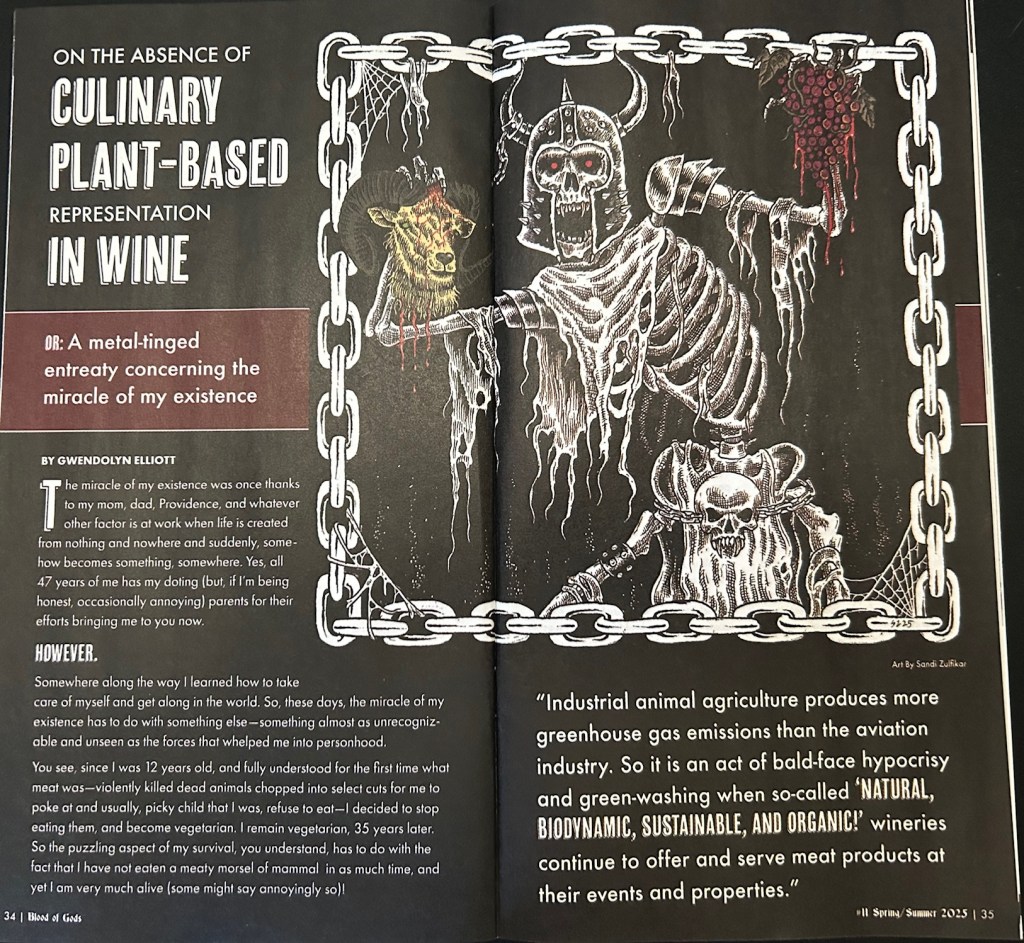
Recently, I had the pleasure to contribute to Blood of Gods, a wine-meets-heavy-metal-music ‘zine published right here in Walla Walla that I profiled back in 2021 for the U-B. Publisher Stacy Buchanan and his wonderful wife, Heidi, have since become dear friends. I couldn’t resist the opportunity to spew my plant-based propaganda in his hollowed pages, and trot out a few heavy metal references I’ve clearly waited decades to dust off.
My piece is below. If you like irreverent, not-so-serious (and occasionally serious), everyone’s welcome wine coverage, consider a very cheap and totally worth it subscription to the publication—as I write for Visit Walla Walla, it’s “a blast of decibel-shredding fresh air” in a wine landscape that’s all too often “stale, pale, and male.”
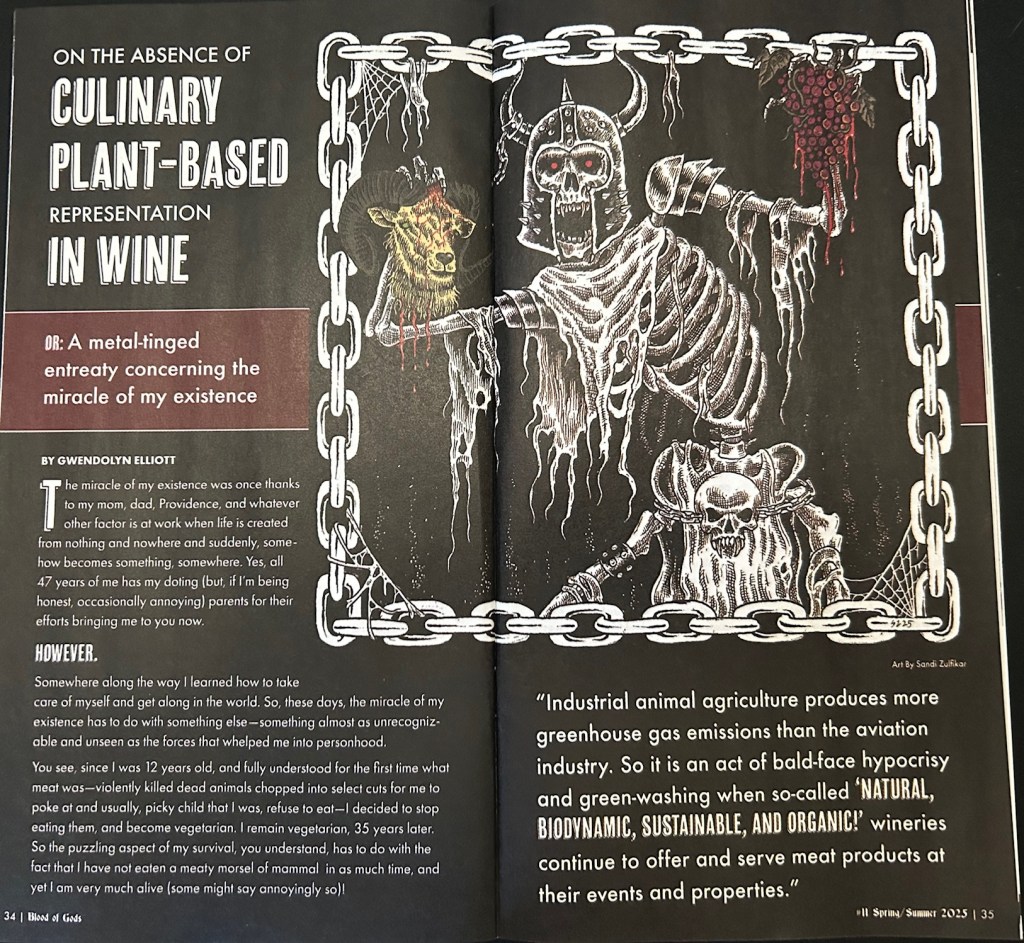
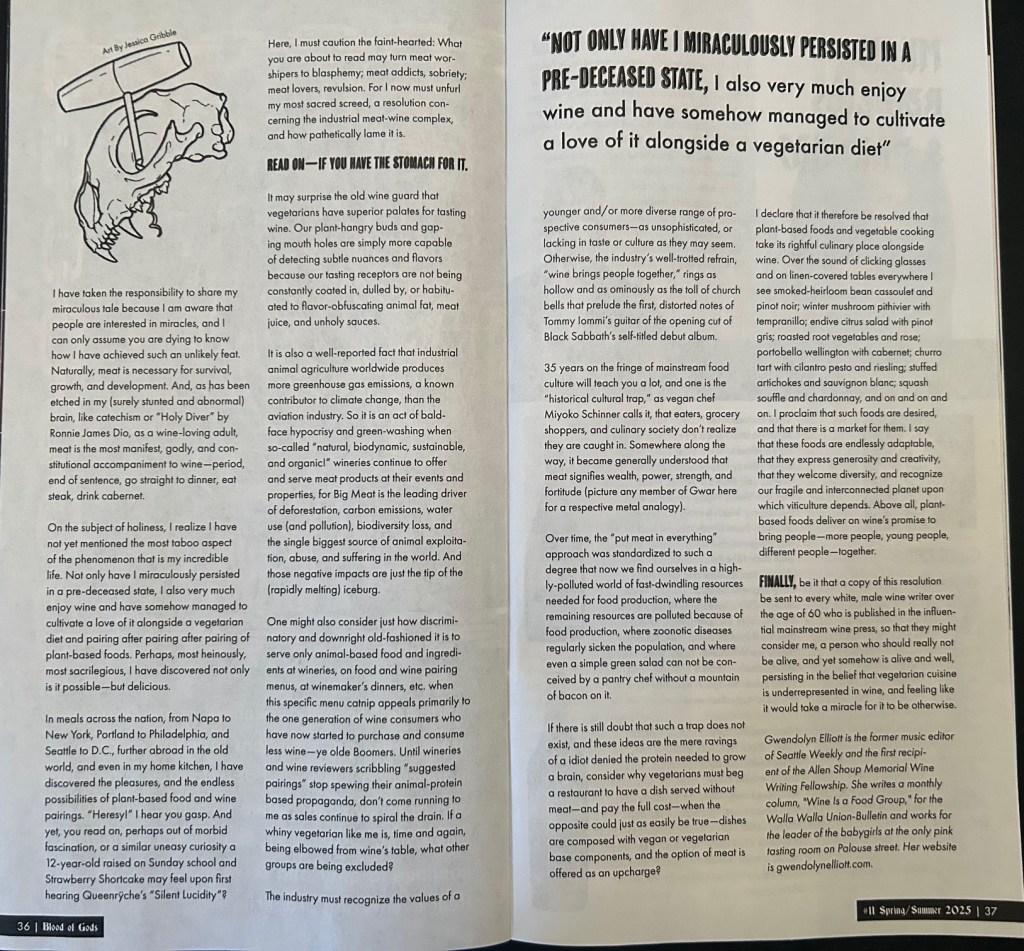
The miracle of my existence was once thanks to my mom, dad, Providence, and whatever other factor is at work when life is created from nothing and nowhere and suddenly, somehow becomes something, somewhere. Yes, all 47 years of me has my doting (but, if I’m being honest, occasionally annoying) parents for their efforts bringing me to you now.
However.
Somewhere along the way I learned how to take care of myself and get along in the world. So, these days, the miracle of my existence has to do with something else—something almost as unrecognizable and unseen as the forces that whelped me into personhood.
You see, since I was 12 years old, and fully understood for the first time what meat was—violently killed dead animals chopped into select cuts for me to poke at and usually, picky child that I was, refuse to eat—I decided to stop eating them, and become vegetarian. I remain vegetarian, 35 years later. So the puzzling aspect of my survival, you understand, has to do with the fact that I have not eaten a meaty morsel of mammal in as much time, and yet I am very much alive (some might say annoyingly so)!
I have taken the responsibility to share my miraculous tale because I am aware that people are interested in miracles, and I can only assume you are dying to know how I have achieved such an unlikely feat. Naturally, meat is necessary for survival, growth, and development. And, as has been etched in my (surely stunted and abnormal) brain, like catechism or “Holy Diver” by Ronnie James Dio, as a wine-loving adult, meat is the most manifest, godly, and constitutional accompaniment to wine—period, end of sentence, go straight to dinner, eat steak, drink cabernet.
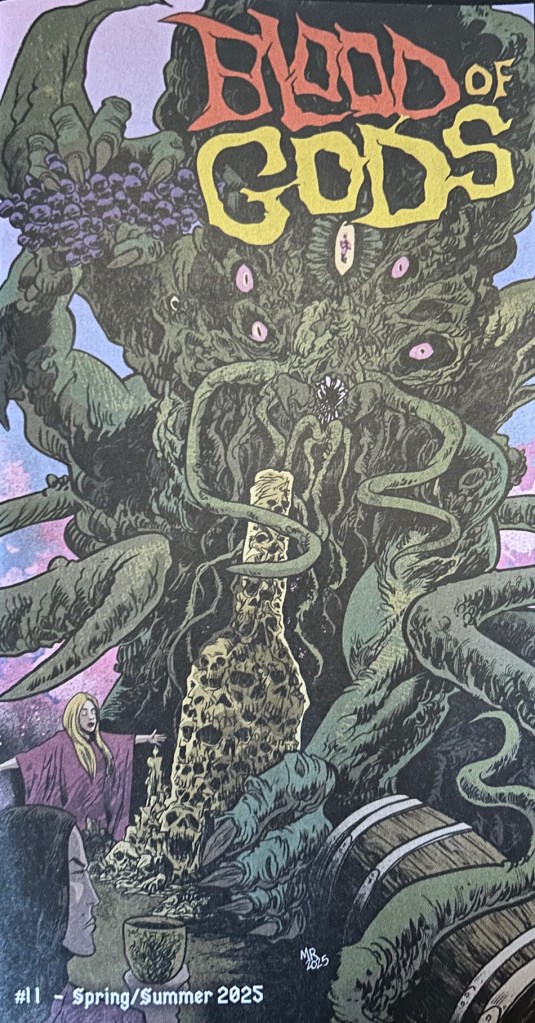
On the subject of holiness, I realize I have not yet mentioned the most taboo aspect of the phenomenon that is my incredible life. Not only have I miraculously persisted in a pre-deceased state, I also very much enjoy wine and have somehow managed to cultivate a love of it alongside a vegetarian diet and pairing after pairing after pairing of plant-based foods. Perhaps, most heinously, most sacrilegious, I have discovered not only is it possible—but delicious.
As a vegetarian, I have somehow, miraculously, persisted in a pre-deceased state
In meals across the nation, from Napa to New York, Portland to Philadelphia, and Seattle to D.C., further abroad in the old world, and even in my home kitchen, I have discovered the pleasures, and the endless possibilities of plant-based food and wine pairings. “Heresy!” I hear you gasp. And yet, you read on, perhaps out of morbid fascination, or a similar uneasy curiosity a 12-year-old raised on Sunday school and Strawberry Shortcake may feel upon first hearing Queenrÿche’s “Silent Lucidity”?
Here, I must caution the faint-hearted: What you are about to read may turn meat worshipers to blasphemy; meat addicts, sobriety; meat lovers, revulsion. For I now must unfurl my most sacred screed, a resolution concerning the industrial meat-wine complex, and how pathetically lame it is.
Read on—if you have the stomach for it.
It may surprise the old wine guard that vegetarians have superior palates for tasting wine. Our plant-hangry buds and gaping mouth holes are simply more capable of detecting subtle nuances and flavors because our tasting receptors are not being constantly coated in, dulled by, or habituated to flavor-obfuscating animal fat, meat juice, and unholy sauces.
It is also a well-reported fact that industrial animal agriculture worldwide produces more greenhouse gas emissions, a known contributor to climate change, than the aviation industry. So it is an act of bald-face hypocrisy and greenwashing when so-called “natural, biodynamic, sustainable, and organic!” wineries continue to offer and serve meat products at their events and properties, for Big Meat is the leading driver of deforestation, carbon emissions, water use (and pollution), biodiversity loss, and the single biggest source of animal exploitation, abuse, and suffering in the world. And those negative impacts are just the tip of the (rapidly melting) iceberg.
One might also consider just how discriminatory and downright old-fashioned it is to serve only animal-based food and ingredients at wineries, on food and wine pairing menus, at winemaker’s dinners, etc. when this specific menu catnip appeals primarily to the one generation of wine consumers who have now started to purchase and consume less wine—ye olde Boomers. Until wineries and wine reviewers scribbling “suggested pairings” stop spewing their animal-protein based propaganda, don’t come running to me as sales continue to spiral the drain. If a whiny vegetarian like me is, time and again, being elbowed from wine’s table, what other groups are being excluded?
The industry must recognize the values of a younger and/or more diverse range of prospective consumers—as unsophisticated, or lacking in taste or culture as they may seem. Otherwise, the industry’s well-trotted refrain, “wine brings people together,” rings as hollow and as ominously as the toll of church bells that prelude the first, distorted notes of Tommy Iommi’s guitar of the opening cut of Black Sabbath’s self-titled debut album.
35 years on the fringe of mainstream food culture will teach you a lot, and one is the “historical cultural trap,” as vegan chef Miyoko Schinner calls it, that eaters, grocery shoppers, and culinary society don’t realize they are caught in. Somewhere along the way, it became generally understood that meat signifies wealth, power, strength, and fortitude (picture any member of Gwar here for a respective metal analogy).
Over time, the “put meat in everything” approach was standardized to such a degree that now we find ourselves in a highly-polluted world of fast-dwindling resources needed for food production, where the remaining resources are polluted because of food production, where zoonotic diseases regularly sicken the population, and where even a simple green salad can not be conceived by a pantry chef without a mountain of bacon on it.
If there is still doubt that such a trap does not exist, and these ideas are the mere ravings of an idiot denied the protein needed to grow a brain, consider why vegetarians must beg a restaurant to have a dish served without meat—and pay the full cost—when the opposite could just as easily be true—dishes are composed with vegan or vegetarian base components, and the option of meat is offered as an upcharge?
Madness! The ravings of an idiot denied the protein needed to grow a brain!*
I declare that it therefore be resolved that plant-based foods and vegetable cooking take their rightful culinary place alongside wine. Over the sound of clicking glasses and on linen-covered tables everywhere I see smoked-heirloom bean cassoulet and pinot noir; winter mushroom pithivier with tempranillo; endive citrus salad with pinot gris; roasted root vegetables and rose; portobello wellington with cabernet; churro tart with cilantro pesto and riesling; stuffed artichokes and sauvignon blanc; squash souffle and chardonnay, and on and on and on. I proclaim that such foods are desired, and that there is a market for them. I say that these foods are endlessly adaptable, that they express generosity and creativity, that they welcome diversity, and recognize our fragile and interconnected planet upon which viticulture depends. Above all, plant-based foods deliver on wine’s promise to bring people—more people, young people, different people—together.
Finally, be it that a copy of this resolution be sent to every white, male wine writer over the age of 60 who is published in the influential mainstream wine press, so that they might consider me, a person who should really not be alive, and yet somehow is alive and well, persisting in the belief that vegetarian cuisine is underrepresented in wine, and that it shouldn’t take a miracle to change it.
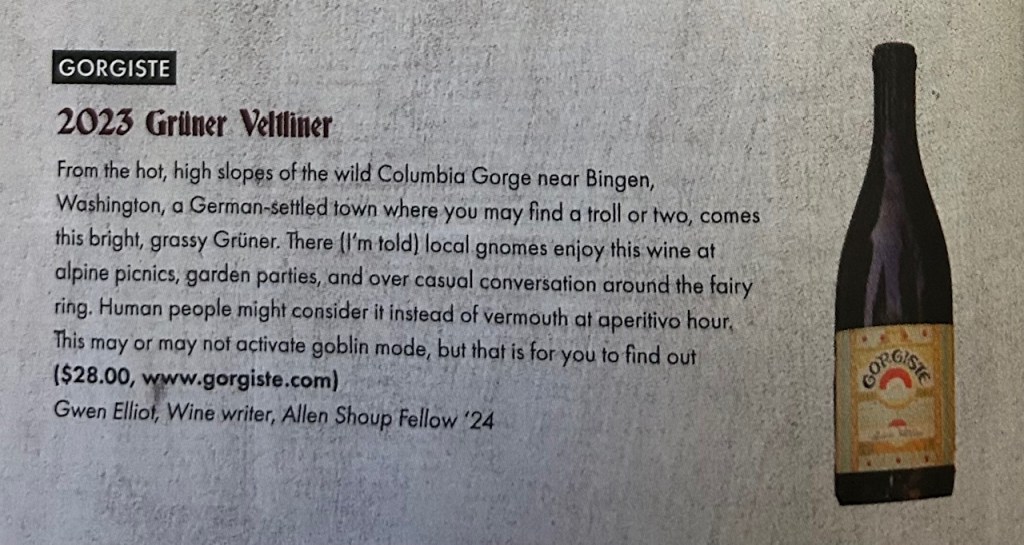
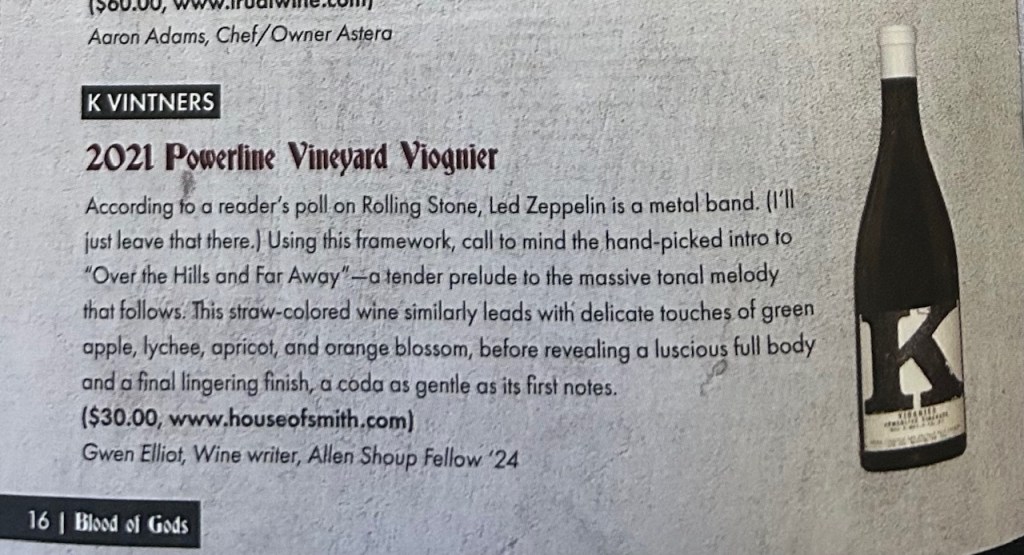
Endnote: I also contributed a few wine reviews. I’m just out here actively seeking ways to insert the phrase “goblin mode” into as much of my professional wine writing as possible.
*Side note: In his book, “Buzz,” Thor Hanson offers a counterpoint to the common belief that it was meat that helped the human brain evolve. He argues it could have been sugar—in the form of needed carbohydrates such as honey—that contributed to brain development as humans evolved.
Bird walk: Interestingly, Hanson also includes a chapter specifically about Walla Walla, and the famous native, ground nesting, low-flying alkali bees of Touchet that farmers have learned are such excellent pollinators of alfalfa a special speed limit is warranted to protect them—20 miles an hour.


 Gwendolyn Elliott
Leave a reply to Toby Turlay Cancel reply