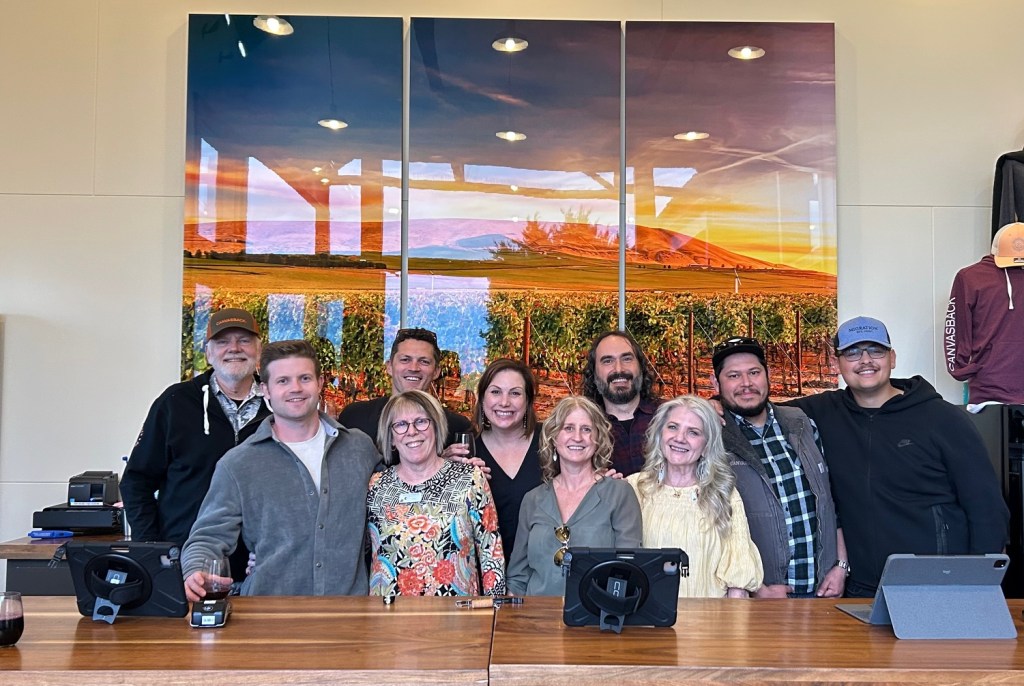
>>>>> Featured image: Some of the faces of Team Canvasback over the years, assembled together at the tasting room Monday, May 19th.<<<<<
I was pleased to see my first article in Decanter go live today, on the subject of sustainable viticulture, and more broadly, the sustainability of the wine business in general. If you’re interested, here’s a link and PDF to the story.
As soon-closing Canvasback ramps down, many in and around the wine business have been giving thought to the idea of what sustainability actually looks like—or is destined to be—in the current climate.
In this interstitial meanwhile, Toby organized a big Canvasback send off party on Monday, and the CB team rallied for one last big hurrah, with $5 glass pours, a great band from Seattle, lawn games, food from Wild Thyme mobile bistro (which sold out of everything and had co-owner Tristyne Brindle saying it was “awesome” for a Monday night), and lots of camaraderie. A large crowd came and went throughout the evening: friends of Canvasback employees, club members, and locals from the wine industry who came to wish everyone well.
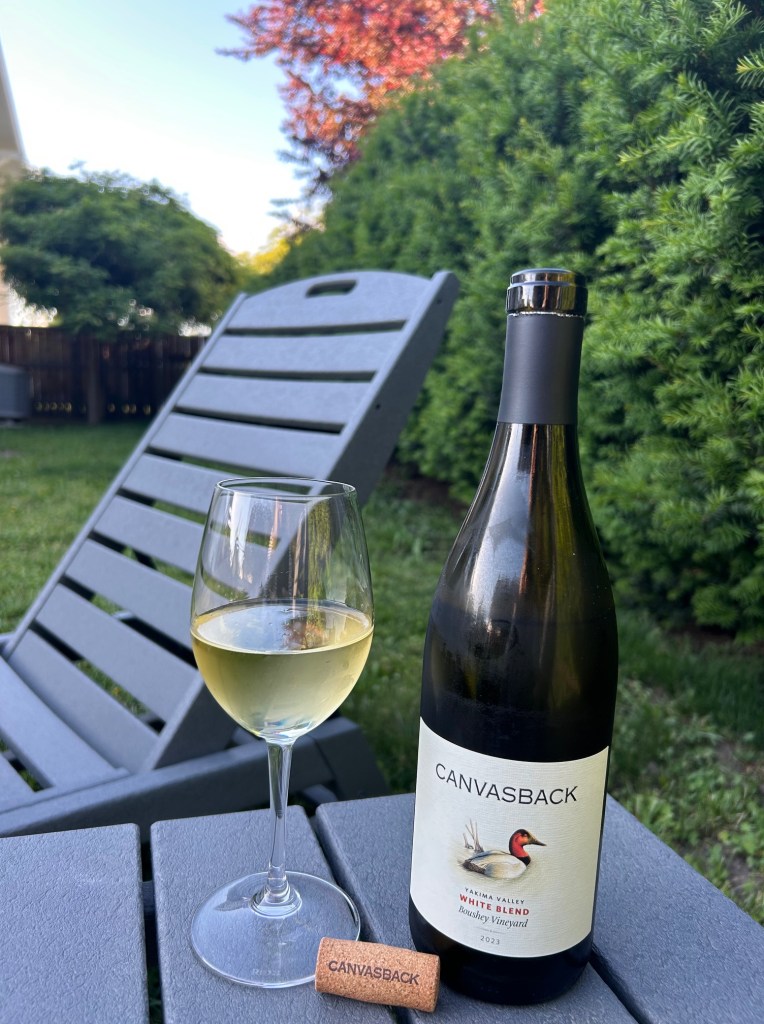
My much-smarter-than-me sister, who works in climate change, said her company’s strategy towards sustainability “is around the best possible outcomes for People, Nature, and Climate, underpinned by long-term systems thinking.” I couldn’t help thinking it would have only taken a few strategic tweaks to chart a much-different path for Canvasback, because, at least for a while, it could be said Duckhorn tried to check those boxes.
Circumstances are changing in Walla Walla, and the wine industry itself. How are we thinking about the sustainability of the wine business, and about the long-term systems that connect the layers of social, cultural, and economic life in wine communities? Not to mention nature, climate—and glass recycling, for example?
Walla Walla is known for its great restaurants—but our beloved food scene is unlikely to be sustainable without the many area wineries attracting tourists that drive hard-to-get reservations. In fact, most of the restaurants are here explicitly because of the wine industry.
I’ll have more to say about this in my next “Wine Is a Food Group” column, and elsewhere. But the talk of restaurants is making me hungry. I’m off to find something more substantial than just food for thought.
Until next time, buy local, drink Washington wine, and think “sustainable.”


 Gwendolyn Elliott
Leave a reply to Sean P. Sullivan Cancel reply