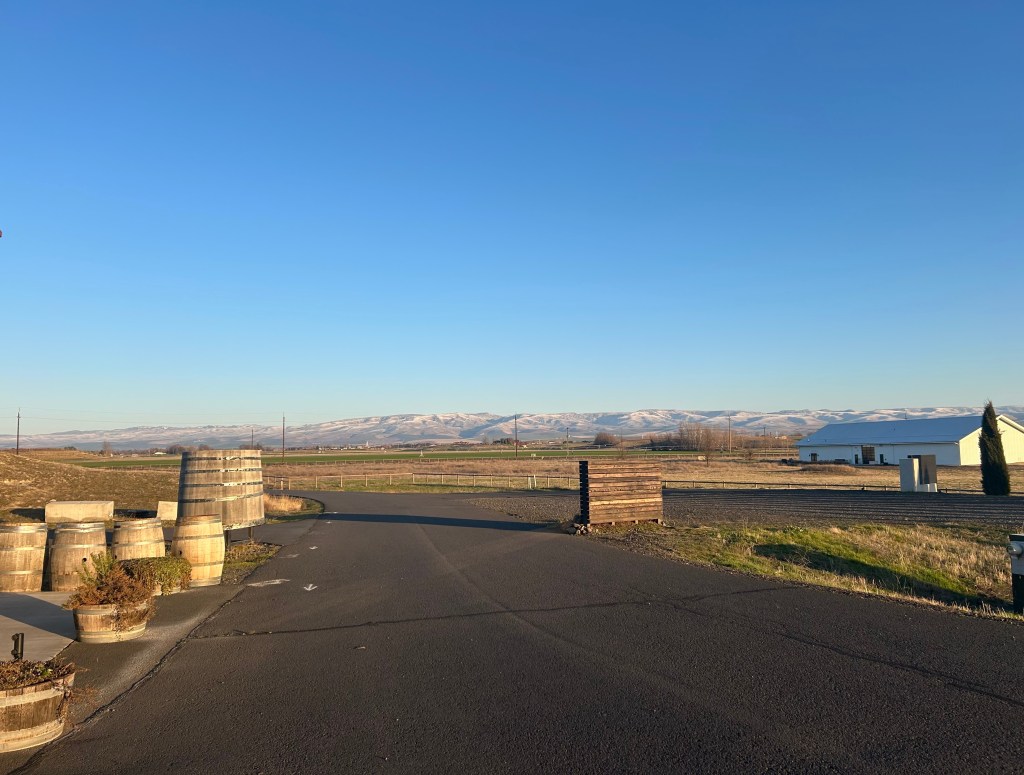
>>>>> Featured image: Looking east from the south side about a week ago. In the middle of the road, praying for snow, a sign, something. <<<<<
Over the course of my now-complete wine writing fellowship, I gave a lot of thought to the challenges facing wine writers. At the onset, I wondered what would be possible under the current circumstances—an ever-diminishing editorial landscape and the lack of opportunities to be published (for a fun exercise in hand-wringing, try pitching Wine Enthusiast’s automated “Pitch Bot”); dwindling readerships and paid subscriptions to encounter bylines; influencers seizing frayed attention spans for sponsored content from authentic creators with a point of view; certainly little payoff to make the reporting and effort needed to bring a story to life worth the trouble.
However, regarding the story of Washington state wine specifically, perhaps because of my ineptitude or laziness or fragile ego as a writer, I have increasingly wondered if writing will only get us so far, and I have observed my thoughts, while still consumed with the frustrating realities of the freelance life, drift to a looming, unfinished question of marketing.
For one reason, over the past two years, as I’ve publicly faced wine consumers in the tasting room, I’ve found myself with a captive audience that conveniently doubles as a fringe focus group.
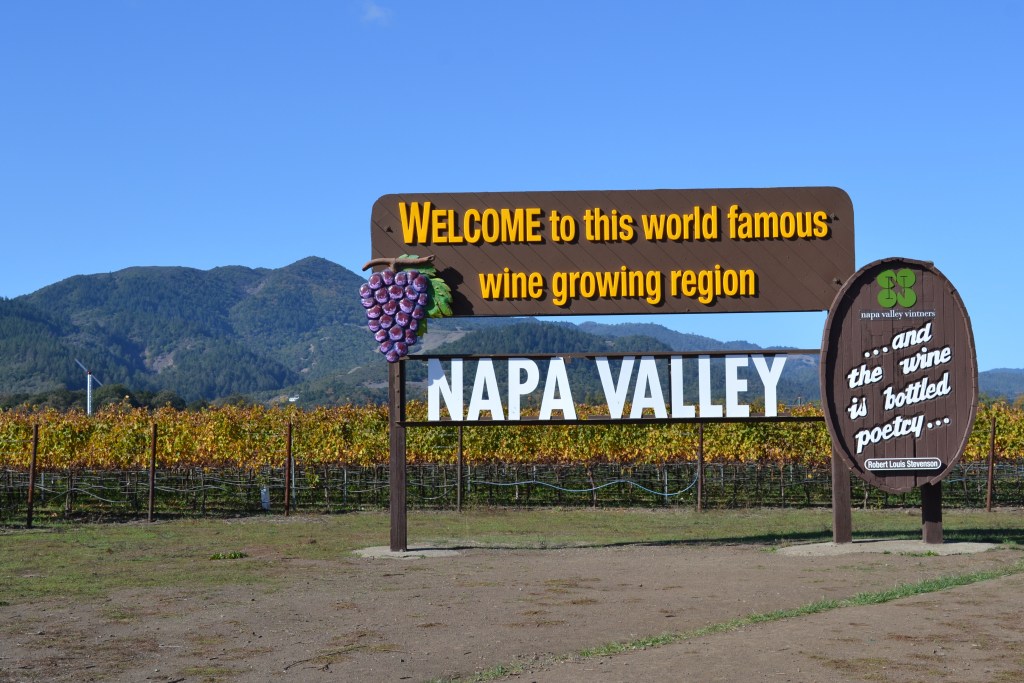
Recently, I asked a very nice couple from Kirkland if they thought Walla Walla should have a sign—like Napa’s famous “…and the wine is bottled poetry” roadside attraction—and what it would say. Based on the idea that so many varietals grow well here, I floated the idea of “Washington Wine Country: Something for Everyone.”
No, that won’t work, they quickly surmised. You have to project an identity of quality, of something exclusive, or luxury, or above average. Appealing to everyone diminishes the value proposition. (On the one hand this saddened me, not only because inclusivity is a huge blind spot in the wine industry, but because I work hard to make everyone feel welcome in wine. On the other hand, from a marketing perspective, I could see how my tagline could use some finessing.)
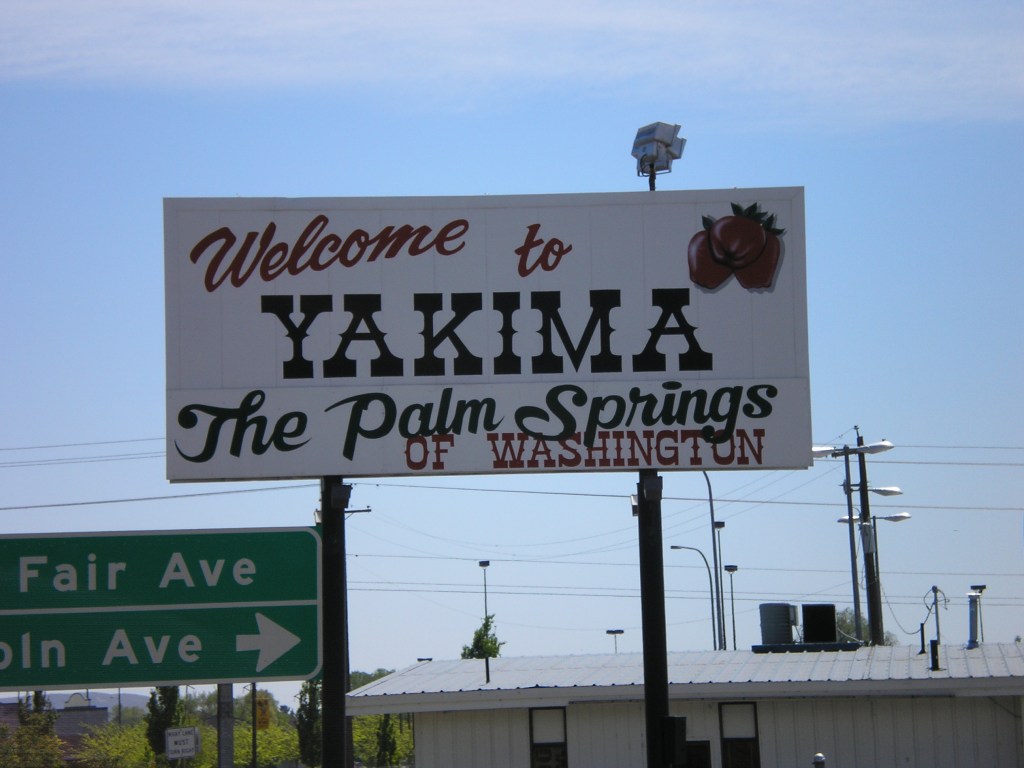
Fresh from their drive over from the west side—where about halfway motorists can not unsee the lightning rod “Welcome to Yakima: The Palm Springs of Washington” sign—the subject was apropos. We talked about the Napa sign. If some wine-specific marquee was plopped in Washington, (and I paraphrase), one guest said, “It’s like a free ad. Everyone would be posting it on Instagram…”
But what would it say? My easy going group and I couldn’t decide (and they each received a bonus pour for their generous feedback).
The other reason marketing remains top of mind is based on a few general observations. Once, at the end of an interview with a New York City restaurateur familiar with west coast wines, I casually asked what Washington wines were on his wine list. He eagerly mentioned an Oregon brand. In Europe this past summer, while it was rare to see any U.S. wines on lists in any country, when they would (again, rarely) appear, by volume it was always California, followed by Oregon, then Washington (and I only remember seeing Washington once, somewhere on the list, if I recall correctly, at Noble Rot in Mayfair, London).
This brings me to my headline. I took the two screenshots below today on winejobs.com, where I click every weekday after scrolling through my Wine Business Daily News email that I gobble up like movie theater popcorn.
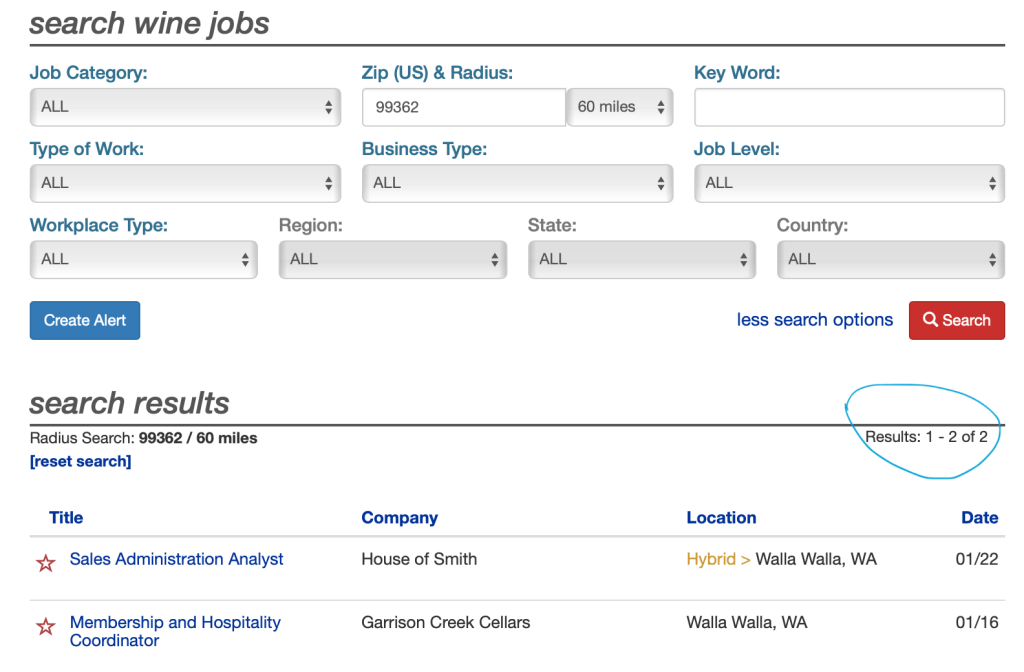
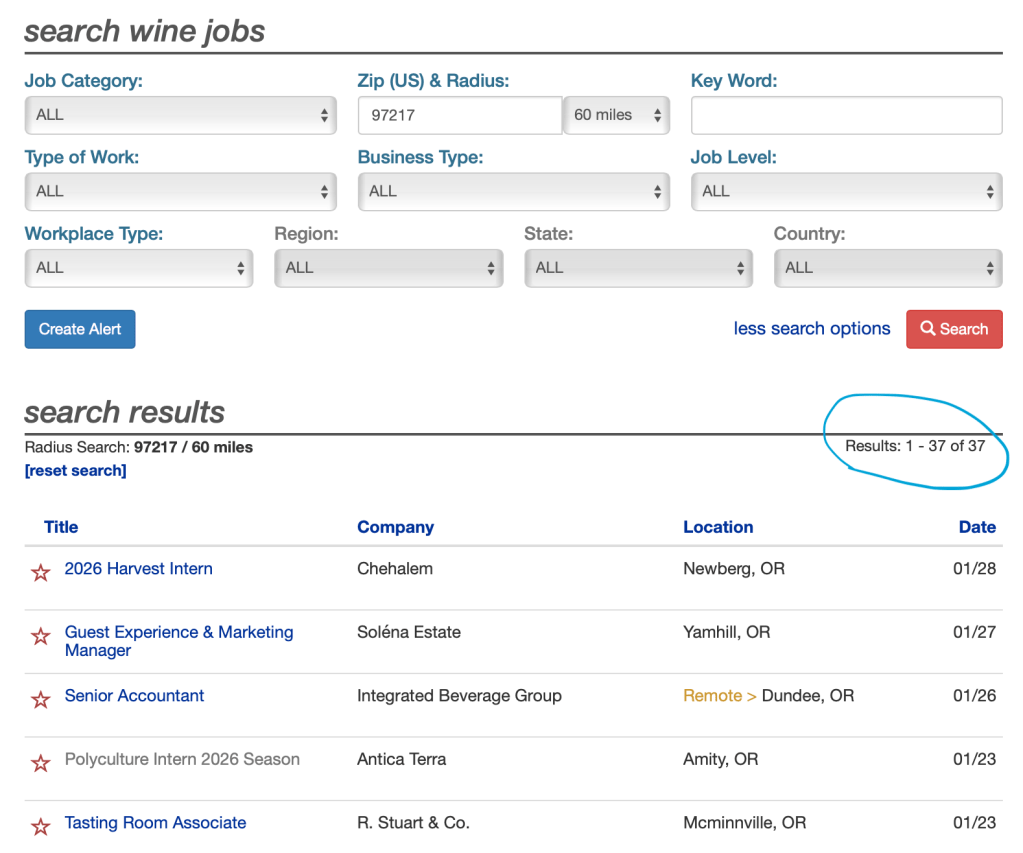
Currently, there are two wine jobs available in a 60 mile radius of Walla Walla, and 37 in a similar radius of Willamette Valley (I used a zip code from Portland for the example search but the number is still 37 out of Newberg’s zip code, 97132). Today, in this current market. Yes, the markets are different, but because each is part of a larger, state-wide wine industry, let’s just say this is an apples-to-apples comparison. With this rough picture established, from market health to open opportunities, well, there’s your sign.
However Oregon did it—and there’s theories a-plenty out there for you to find—to me there’s no question that the Beaver state is winning handily in the post-California match up between the two remaining west coast states vying for brand recognition. And to rub it in, Oregon produces less wine, and fewer varietals, than Washington state.
Now, as Chateau Ste. Michelle, the iconic brand my former fellowship’s namesake, Allen Shoup, helped shepherd into the spotlight as the Washington state wine brand, enters a new era of Washington state-based ownership—and a recently announced “brand renaissance”—I hope marketing remains top of mind for those in the driver’s seat.
I am puzzled by the fuzzy, low-resolution image shared in the press release I read, and the label re-brand itself, which feels like an aesthetic plucked from the ‘90s, and not in a knowing, ironic way, but in a “I just discovered balsamic dressing and sundried tomatoes taste great on a salad and you should give it a try” kind of way. (You can find higher res bottle shots through the links on this page. However even in crisp detail, I’m struggling to see where the urgency to rebrand so quickly originated, because the new look to me feels soulless and little changed. Just because there’s a new font and foil colors still doesn’t explain the why. Is there a significance to the color change? Does it speak to the brand’s history somehow? People are font obsessed—what’s the name of the type? Why was it selected? I digress.)
I wish I was better at marketing, and for that matter, maybe even as a writer, to propose some meaningful solutions to help our state’s wine industry compete with what often seems simply better branding.
Until I crack that code, I’ll be waiting for a sign.


 Gwendolyn Elliott
Leave a reply to Gwendolyn Elliott Cancel reply